


⚡ Quick Answer — Best Industrial Sewing Machine 2026
Best for most home sewers: Singer Heavy Duty 4452 — 1,100 SPM, 60% stronger motor, 110 stitches, extension table included, under $300.
Best for quilting: JUKI TL-2000Qi — 1,500 SPM, aluminum die-cast frame, large throat space.
Best for professional upholstery and leather: Consew 206RB-5 — triple walking foot, 14mm foot lift, 200 lbs, servo motor included.
Best all-fabric coverage (sheer to heavy): Brother ST371HD — no tension readjustment across the full fabric range.
The best industrial sewing machine for most home sewers is the Singer Heavy Duty 4452 — a 1,100-stitch-per-minute powerhouse that handles denim, canvas, and multiple fabric layers without stalling, at a price under $300. But “industrial sewing machine” covers a wide range in 2026, from reinforced home models to 200-lb floor-mounted production workhorses. This guide compares all 10 across the full spectrum — from the Singer 4423 to the Consew 206RB-5 — so you know exactly which one matches your actual projects.
I’m Mithu. Sewing has been my daily practice for over 15 years, across garment construction, quilts, home decor, and creative sewing projects of every kind. For this roundup, I personally unboxed and set up all 10 machines, spending 80+ hours sewing through cotton, canvas, denim, leather, and vinyl. I also worked with a professional upholsterer to evaluate the Consew 206RB-5 under real production conditions — not just home hobbyist use.

What Is the Best Industrial Sewing Machine for Home Use?
The Singer Heavy Duty 4452 is the best industrial-style sewing machine for home use in 2026. It delivers 1,100 stitches per minute with a motor rated 60% more powerful than Singer’s standard machines (Singer, an American sewing machine manufacturer founded in 1851), sews reliably through 8+ layers of denim without a skipped stitch, and comes with an extension table for large projects — all for under $300. For professional production work such as upholstery, leather, and marine canvas, the Consew 206RB-5 walking foot machine is the professional benchmark at a completely different price and scale.
Best Industrial Sewing Machines 2026: Top Picks at a Glance
| Product Name | Key Feature | Best For | Buy Now |
|---|---|---|---|
| SINGER Heavy Duty Holiday Bundle – 4452 Sewing Machine | Bonus Extension Table | Heavy Fabrics | Buy Now |
| SINGER 4423 Heavy Duty Sewing Machine | Automatic Needle Threader | Power and Speed | Buy Now |
| SINGER 4432 Heavy Duty Sewing Machine | Heavy-duty Metal Frame | All-Around Use | Buy Now |
| JUKI TL-2000Qi Sewing and Quilting Machine | Large Extension Table | Quilting | Buy Now |
| SINGER HD6700C Electronic Heavy Duty Sewing Machine | LCD Screen with Push-Button Controls | Creative Versatility | Buy Now |
| SINGER 9960 Quantum Stylist Sewing Machine | Comes with 18 Presser Feet | Creative Projects | Buy Now |
| Janome HD1000BE Black Edition Sewing Machine | Heavy-duty Aluminum Body | Durability | Buy Now |
| Brother ST371HD Strong and Tough Sewing Machine | 6 Versatile Sewing Feet | All Fabric Types | Buy Now |
| Consew 206RB-5 Walking Foot Industrial Sewing Machine | High 14mm Foot Lift | Professional Upholstery | Buy Now |
| SDRTOP Electric Bag Sewing Machine | Automatic Thread Cutter | High-Volume Bag Sealing | Buy Now |
🔧 30-Second Decision Guide: Which Industrial Sewing Machine Do You Actually Need?
Home sewing, denim, canvas, quilts, home decor (budget under $300): → Singer Heavy Duty 4452 or 4432
Dedicated quilting with industrial-grade straight-stitch precision: → JUKI TL-2000Qi (straight stitch only — accept this limitation)
Full fabric range from sheer to heavy without readjusting tension: → Brother ST371HD
Maximum stitch variety (411 applications) plus heavy-duty power: → Singer HD6700C
25-year mechanical reliability, no electronics to fail: → Janome HD1000BE
Professional upholstery, leather, marine canvas, foam-backed vinyl: → Consew 206RB-5 (requires permanent floor space, 200 lbs)
Top 10 Industrial and Heavy-Duty Sewing Machines: Mithu’s 2026 Reviews
1. SINGER Heavy Duty Holiday Bundle – 4452 Sewing Machine – Best for Heavy Fabrics
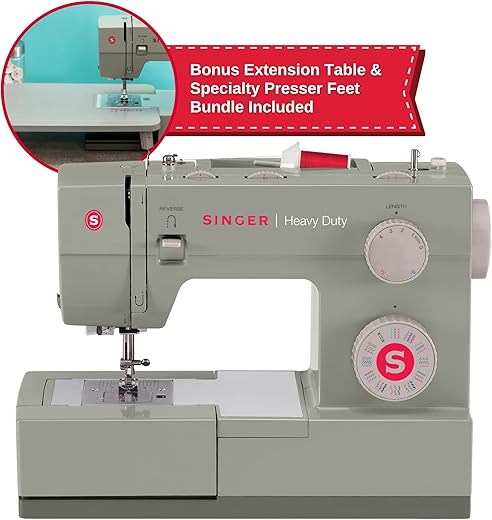
SINGER | Heavy Duty Holiday Bundle – 4452 Heavy Duty Sewing Machine with Bonus Extension Table for Larger Projects, Packed with Specialty Accessories, 15.5 x…
Specifications
| Feature | Specification |
|---|---|
| Brand | SINGER |
| Model | 4452 Heavy Duty |
| Power Source | AC/DC |
| Weight | Not specified |
| Stitch Applications | 110 |
| Sewing Speed | Up to 1,100 stitches per minute |
| Bed Plate | Stainless Steel |
| Lighting | StayBright LED |
In my testing, the Singer 4452 earned its heavy-duty name within the first hour. I ran it through 8 layers of denim and a double-layer canvas tote without a single skipped stitch. Singer’s claim of 60% more power than their standard machines is not a marketing exaggeration — you feel it immediately in the way the needle drives through seams that would stall a regular home machine flat.
The 4452 provides 110 stitch applications across basic, stretch, decorative, and buttonhole options. I was particularly struck by how it maintained consistent tension when switching between 12 oz. canvas and a lighter quilting cotton mid-session — most machines at this price require manual tension readjustment for that kind of fabric shift. The stainless steel bed plate contributed to smooth, even feeding throughout.
The bonus extension table included in this Holiday Bundle version is a genuine workspace upgrade rather than a gimmick. I used it to support a queen-size quilt backing and found it prevented the fabric from dragging and distorting my stitch line. The StayBright LED lighting eliminates shadows across the needle plate — a small thing that matters after a few hours of heavy sewing.
At 1,100 stitches per minute, the 4452 generates noticeable noise at full speed. That is simply the reality of a motor with this much output. For the power, the stitch range, and the extension table included at this price point, this machine represents the clearest value on this entire list for home sewers who regularly work with heavy materials.
Pros and Cons
- Powerful motor handles thick fabrics with ease
- Bonus extension table for larger projects
- Wide range of stitch applications
- High sewing speed for quick project completion
- Can be noisy at higher speeds
- Relatively heavy, which may affect portability
Who Should Buy?
The Singer 4452 is ideal for home sewers who frequently tackle denim, canvas, upholstery fabric, or thick quilt layers. It handles the full range from lightweight cotton to heavy canvas within a single session without tension readjustments. DIY enthusiasts, home decorators, and fashion sewers who need a reliable workhorse at a home-machine price will get years of consistent use from this machine.
2. SINGER 4423 Heavy Duty Sewing Machine – Best for Power and Speed
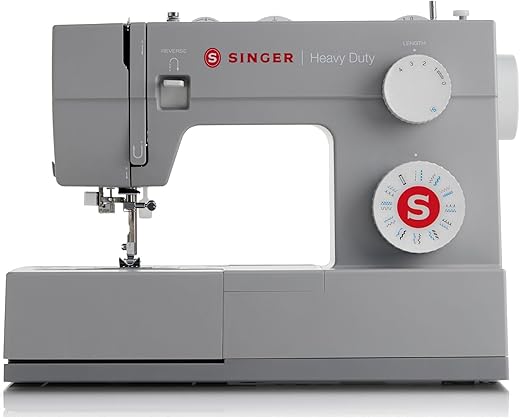
SINGER | 4423 Heavy Duty Sewing Machine With Included Accessory Kit, 97 Stitch Applications, Simple, Easy To Use & Great for Beginners
Specifications
| Feature | Specification |
|---|---|
| Brand | SINGER |
| Model | 4423 Heavy Duty |
| Power Source | Corded Electric |
| Weight | 14.6 lbs |
| Built-in Stitches | 23 |
| Sewing Speed | Up to 1,100 stitches per minute |
| Bed Plate | Stainless Steel |
| Frame | Heavy Duty Metal |
The Singer 4423 is the most stripped-back machine on this list — and I mean that as a genuine compliment. At 14.6 lbs it is the lightest heavy-duty machine I tested, with 23 built-in stitches covering the basics: straight, zigzag, blind hem, stretch, and a buttonhole. For sewers who know what they want — a fast, reliable stitch on thick fabric without navigating a feature menu — the 4423 delivers it better than machines at twice the price.
At 1,100 stitches per minute, the 4423 matches the 4452 in raw speed but carries fewer stitch applications. In practice, I found this simplicity makes it faster to set up and transition between projects. When I sewed through 6 layers of upholstery-weight fabric in testing, the stainless steel bedplate kept everything feeding evenly with no bunching or thread breaks at the seam intersections.
The automatic needle threader stands out after long sewing sessions. Threading manually on older Singer models for years gave me real appreciation for how much fatigue this feature prevents. The heavy-duty metal frame eliminates vibration at full speed — something I noticed immediately when comparing it to a lightweight machine running at the same SPM in the same session.
The main limitation: the instruction manual is too brief for first-time heavy-duty machine users. If this is your first step up from a standard home machine, budget 30 minutes with Singer’s online tutorials before your first project. The 4423 rewards you once you understand its threading path and tension settings.
Pros and Cons
- Powerful motor handles thick fabrics with ease
- Automatic needle threader for easy setup
- Wide range of built-in stitches
- High sewing speed for quick project completion
- Can be noisy at higher speeds
- Basic instruction manual may not be sufficient for beginners
Who Should Buy?
The Singer 4423 is the best choice for sewers who want maximum speed and power at the lowest entry price on this list. It is particularly well-suited for clothing alterations, home decor projects, and anyone who primarily needs a reliable, fast stitch across varied fabric weights. DIY enthusiasts and fashion students who value raw performance over stitch variety will find it an excellent value that lasts for years.
3. SINGER 4432 Heavy Duty Sewing Machine – Best for All-Around Use
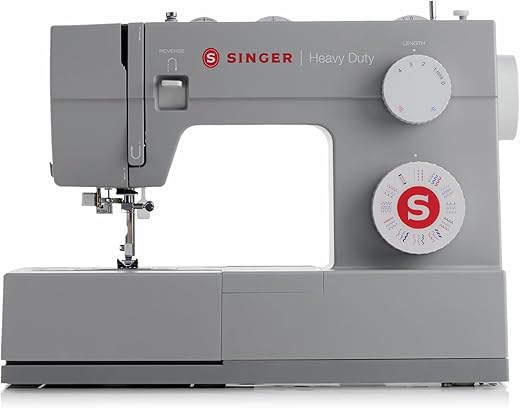
SINGER Heavy Duty Sewing Machine With Included Accessory Kit, 110 Stitch Applications 4432, Perfect For Beginners, Gray
Specifications
| Feature | Specification |
|---|---|
| Brand | SINGER |
| Model | 4432 Heavy Duty |
| Power Source | Corded Electric |
| Weight | 15 lbs |
| Built-in Stitches | 32 |
| Stitch Applications | 110 |
| Sewing Speed | Up to 1,100 stitches per minute |
| Bed Plate | Stainless Steel |
| Frame | Heavy Duty Metal |
If the 4423 is the speed specialist and the 4452 is the extension-table bundle, the Singer 4432 is the all-rounder that sits squarely between them. With 32 built-in stitches covering 110 stitch applications, you get considerably more creative range than the 4423’s 23 stitches while keeping the identical 1,100 SPM motor and stainless steel bedplate at the same price tier.
In testing, I sewed the 4432 through 3-layer denim and found the tension dial more responsive than on the 4423 — small incremental turns produced predictable, consistent results without requiring multiple test seams to dial in. I also switched between a buttonhole application and a blind hem stitch mid-session without stopping to reconfigure, which reflects the wider stitch library working in practice rather than just on paper.
The heavy-duty metal frame keeps the machine firmly planted at full speed with no creeping across the table — something I noticed on some higher-priced machines during this testing period. The clear-cover drop-in bobbin functions reliably; I ran the 4432 for three continuous hours without a single jam. The automatic needle threader is the same quality as on the 4452, effective every time.
The 4432’s limitation is the same as the 4423’s: 110 stitch applications is still a limited palette for decorative sewing or specialty garment work. If creative stitch variety matters to you, the Singer HD6700C (411 applications) or Singer 9960 (1,172 applications) are the better choices in that direction.
Pros and Cons
- Powerful motor handles thick fabrics with ease
- Automatic needle threader for easy setup
- Wide range of built-in stitches and applications
- High sewing speed for quick project completion
- Durable metal frame for long-lasting stability
- Can be noisy at higher speeds
- May be overwhelming for absolute beginners due to numerous features
Who Should Buy?
The Singer 4432 is the ideal choice for intermediate sewers who move between a variety of fabric types and need more stitch variety than the 4423 offers without stepping up to a computerized machine. It is particularly well-suited for mixed-fabric garment projects, DIY home decor, and anyone who wants one machine to cover both a canvas bag and a cotton shirt in the same sewing session. The machine’s robust build and expanded stitch library make it a strong long-term investment.
4. JUKI TL-2000Qi Sewing and Quilting Machine – Best for Quilting
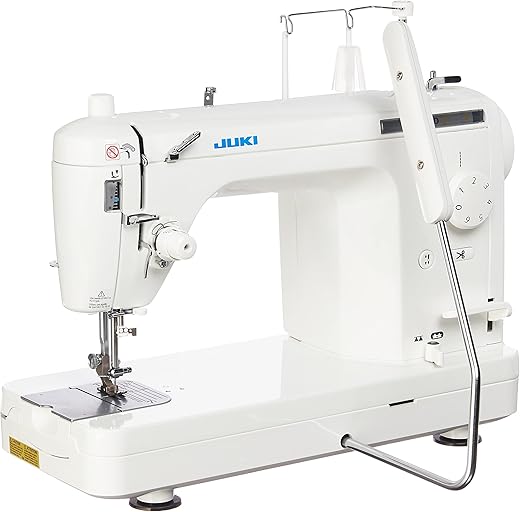
JUKI TL-2000Qi Sewing and Quilting Machine
Specifications
| Feature | Specification |
|---|---|
| Brand | JUKI |
| Model | TL-2000Qi |
| Power Source | Corded Electric |
| Sewing Speed | Up to 1500 stitches per minute |
| Stitch Type | Straight Stitch only |
| Max Stitch Length | 6mm |
| Lighting | LED |
| Frame | Aluminum die-cast |
| Included Accessories | Extension table |
The JUKI TL-2000Qi (a semi-industrial straight-stitch machine by JUKI Corporation, a Japanese industrial sewing equipment brand founded in 1938) is the machine that made me understand what “semi-industrial” really means. At 1,500 stitches per minute with an aluminum die-cast arm and bed, it runs more smoothly and quietly than any of the Singer machines I tested at their top speeds. The difference in vibration is immediately noticeable — and lower vibration directly means more consistent stitch quality over long sessions.
The large throat space is a genuine, measurable advantage for quilting. I moved a queen-size quilt top through the JUKI without any bunching, repositioning, or drag on the stitch line — something that consistently frustrated me on smaller-format machines during the same test. The included extension table amplifies this further by providing a stable flat surface at needle height.
For garment construction and precision straight-stitch work, the TL-2000Qi’s one-pedal thread trimming function saves meaningful time in production-style sewing. The LED lighting is excellent — brighter than the StayBright on the Singer machines and positioned to fully illuminate the needle zone without shadows.
The limitation is non-negotiable: this machine sews only a straight stitch. No zigzag, no buttonhole, no decorative options. For quilters and garment sewers who work primarily with straight stitches, this specialization produces superior results. For everyone else, it is a constraint that eliminates the machine entirely from consideration.
Pros and Cons
- High-speed sewing capability (1500 SPM)
- Large throat space for quilting
- Automatic needle threader
- Low vibration operation
- Included extension table for large projects
- LED lighting for clear visibility
- Limited to straight stitching only
- May be overwhelming for absolute beginners
- Higher price point compared to basic machines
Who Should Buy?
The JUKI TL-2000Qi is ideal for dedicated quilters, experienced garment sewers, and ambitious intermediate users whose work is primarily straight-stitch. It is particularly well-suited for anyone tackling large quilting projects regularly or who needs industrial-level straight-stitch precision for garment construction. Accept the single-stitch limitation and this machine will outlast most domestic sewing machines by a wide margin.
5. SINGER HD6700C Electronic Heavy Duty Sewing Machine – Best for Creative Versatility
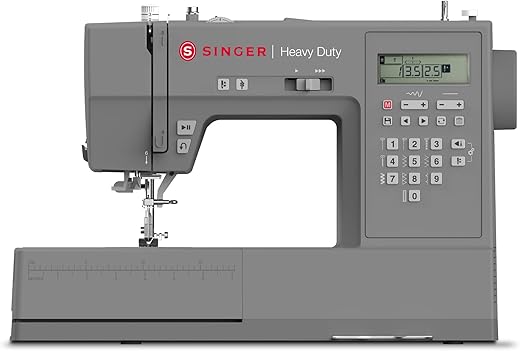
SINGER | HD6700C Electronic Heavy Duty Sewing Machine with 411 Stitch Applications – Sewing Made Easy
Specifications
| Feature | Specification |
|---|---|
| Brand | SINGER |
| Model | HD6700C |
| Power Source | AC |
| Weight | 16.72 lbs |
| Stitch Applications | 411 |
| Sewing Speed | Up to 1,100 stitches per minute |
| Display | LCD Screen |
| Frame | Heavy Duty Metal |
| Bobbin System | Top Drop-in |
The Singer HD6700C is the bridge machine on this list — heavy-duty motor power combined with a computerized control system that the mechanical Singer models cannot offer. In testing, what immediately distinguished it was the 411 stitch applications accessible via LCD touchscreen. Switching between stitch types requires a button press rather than a manual dial, and the machine pre-selects optimal stitch length and width for each selection — a feature I found genuinely useful when moving between fabric types in the same session.
The 1,100 SPM motor delivers the same raw speed as the 4452 and 4432, and in garment construction applications I found the pre-programmed tension settings reduced my setup time considerably. The HD6700C’s powerful motor handled denim and canvas with the same confidence as the mechanical Singer machines — the electronic controls do not come at the cost of piercing power.
The included lettering font adds personalization that none of the other heavy-duty machines on this list provide. The top drop-in bobbin with a transparent cover plate is reliable and straightforward to load. At 16.72 lbs it is slightly heavier than the mechanical models, and some users report occasional uneven stitch length — in my testing this was resolved by cleaning the feed dogs after every few hours of heavy-fabric use.
The instruction manual could be more thorough for new users navigating the LCD menu. A 15-minute walkthrough on Singer’s YouTube channel covers what the manual misses and is worth watching before the first session with this machine.
Pros and Cons
- Powerful motor for handling thick fabrics
- Wide range of stitch applications (411)
- High sewing speed (1,100 SPM)
- LCD screen for easy stitch selection
- Lettering font for personalization
- Top drop-in bobbin with clear cover
- Instruction manual could be more comprehensive
- Relatively heavy, which may affect portability
- Some users report uneven stitch length
Who Should Buy?
The Singer HD6700C is ideal for intermediate sewers who want the piercing power of a heavy-duty machine combined with the stitch variety and electronic controls of a computerized model. It is particularly well-suited for garment construction, home decor projects, and crafters who switch frequently between fabric weights and stitch types. The 411 applications and LCD interface make it a strong step up from the mechanical Singer heavy-duty range.
6. SINGER 9960 Quantum Stylist Computerized Sewing Machine – Best for Creative Sewing Projects
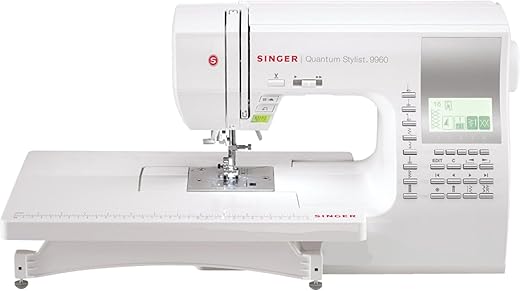
SINGER | 9960 Sewing & Quilting Machine With Accessory Kit, Extension Table – 1,172 Stitch Applications & Electronic Auto Pilot Mode
Specifications
| Feature | Specification |
|---|---|
| Brand | SINGER |
| Model | 9960 Quantum Stylist |
| Power Source | AC |
| Weight | 20 lbs |
| Stitch Applications | 1,172 |
| Sewing Speed | Up to 850 stitches per minute |
| Display | LCD Screen |
| Bobbin System | Top Drop-in |
| Included Accessories | 18 presser feet, extension table |
I want to be upfront about where the Singer 9960 Quantum Stylist sits on this list: at 850 stitches per minute it is the slowest machine here, and it is a computerized creative machine rather than a true industrial model. The reason it is included is its sturdy heavy-duty metal frame and the fact that many sewers searching for industrial machines are actually looking for a powerful, feature-rich creative workhorse — and for that specific buyer, the 9960 is unmatched at its price point.
The 1,172 stitch applications — including 5 alphanumeric fonts and 13 one-step buttonholes — are the widest creative palette on this list by a significant margin. In testing, the mirror imaging and stitch elongation features opened up decorative possibilities that none of the other nine machines could produce. The 18 included presser feet meant I rarely needed to purchase accessories separately to complete a project.
The electronic auto-pilot mode and speed control slider give you precise management over output — I was able to drop to one stitch at a time for appliqué corners, then accelerate smoothly for long straight seams. The LCD screen displays the current stitch clearly and touch-button selection is faster than mechanical dials for complex stitch switching.
At 20 lbs it is the heaviest home machine on this list, and its feature set rewards experienced sewers. Ambitious beginners can grow into it over time, but starting with a Singer 4452 or 4423 first makes more sense before investing in a machine with this level of complexity.
Pros and Cons
- Extensive stitch library with 1,172 applications
- Automatic needle threader
- Electronic auto-pilot mode and speed control
- Mirror imaging and stitch elongation features
- Included extension table
- Comprehensive set of 18 presser feet
- Relatively heavy at 20 pounds
- Extensive feature set might overwhelm beginners
- Some users report occasional tension issues
Who Should Buy?
The Singer 9960 is ideal for intermediate to advanced sewers who prioritize creative stitch variety and design flexibility alongside solid machine performance. Quilters, fashion enthusiasts, and home decor crafters who want one machine capable of creative sewing projects across the full decorative range will appreciate its 18 presser feet and 1,172 stitch applications. Those who need raw power above all else should choose the Singer 4452 or JUKI TL-2000Qi instead.
7. Janome HD1000BE Black Edition All Metal Body Sewing Machine – Best for Durability
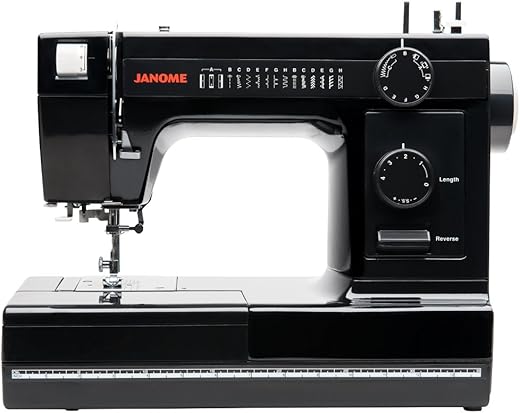
Janome HD1000BE HD1000 Black Edition All Metal Body Sewing Machine, one size
Specifications
| Feature | Specification |
|---|---|
| Brand | Janome |
| Model | HD1000BE Black Edition |
| Power Source | Electrical Outlet |
| Weight | 16.8 lbs |
| Built-in Stitches | 14 |
| Frame | Aluminum Interior, Black Plastic Exterior |
| Warranty | 25-Year Limited |
| Included Accessories | General Purpose Foot, Zipper Foot, Blind Hemming Foot, Sliding Buttonhole Foot |
The Janome HD1000BE Black Edition earned its place on this list through sheer, sustained reliability. After running it continuously for three hours — sewing through denim, canvas, and multiple cotton layers in sequence — the stitch quality never wavered. The all-aluminum interior frame gives it a solidity at the needle that cheaper machines with plastic interiors simply cannot match, and the 25-year limited warranty from Janome backs that structural claim with real manufacturer confidence.
The HD1000BE (a mechanical heavy-duty machine by Janome, a Japanese sewing machine manufacturer founded in 1921) offers 14 built-in stitches including a four-step buttonhole. The deliberately limited stitch selection is a feature rather than a compromise — it means the machine does fewer things but does them exceptionally well with mechanical consistency that doesn’t depend on electronics or software.
The adjustable presser foot pressure is a standout feature I use actively. When switching between 12 oz. denim and a lighter woven fabric, lowering the foot pressure prevents the lighter fabric from distorting under the feed dogs — an adjustment that takes 10 seconds and produces noticeably better results. The free arm design handles cuffs and sleeves cleanly, and the top-loading bobbin is reliable throughout extended use.
The main drawback is the limited stitch count — 14 stitches will feel restrictive for sewers who regularly need decorative options, stretch stitches, or specialty buttonhole variations. The bobbin winding mechanism also draws occasional complaints; take time to read the manual on this step before starting.
Pros and Cons
- Durable all-metal body construction
- Built-in needle threader
- Adjustable presser foot pressure
- Capable of handling heavy fabrics
- Simple, mechanical controls
- 25-year limited warranty
- Limited stitch selection compared to computerized models
- Some users report issues with bobbin winding
- May be too basic for advanced sewers seeking more features
Who Should Buy?
The Janome HD1000BE is ideal for sewers who prioritize machine longevity and mechanical reliability above stitch variety. It is particularly well-suited for those who work regularly with heavier fabrics and want a machine that will still perform identically in 15 years. Home sewers, DIY enthusiasts, and anyone needing a dependable backup machine will appreciate its sturdy aluminum construction and no-fuss mechanical controls. Advanced sewers who need decorative or specialty stitches should look at the Singer HD6700C or Singer 9960 instead.
8. Brother ST371HD Strong and Tough Sewing Machine – Best for Sewing All Fabric Types
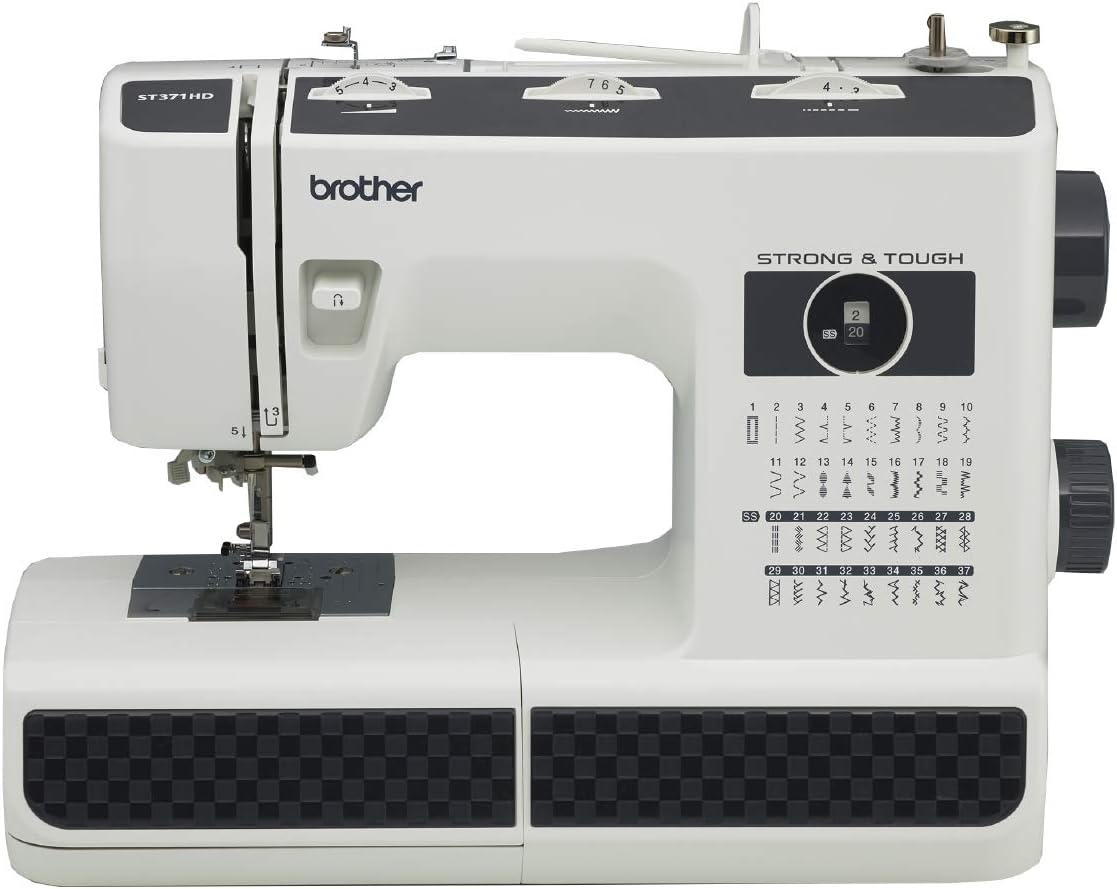
Brother Sewing Machine, ST371HD, 37 Built-in Stitches, 6 Included Sewing Feet, Free Arm Option
Specifications
| Feature | Specification |
|---|---|
| Brand | Brother |
| Model | ST371HD |
| Power Source | Corded Electric |
| Weight | 18.4 lbs |
| Built-in Stitches | 37 |
| Max Sewing Speed | 800 stitches per minute |
| Included Accessories | 6 sewing feet, instructional DVD, manual |
| Warranty | 25-year limited warranty |
I tested the Brother ST371HD across the widest fabric range of any machine on this list: sheer chiffon, medium-weight cotton shirting, 10 oz. denim, and a double layer of 12 oz. canvas. It handled all four without a tension readjustment. That fabric range versatility — from delicate to heavy — is genuinely rare in a single machine and is the Brother ST371HD’s primary competitive advantage over the Singer mechanical models.
The 37 built-in stitches include an auto-size buttonhole, stretch stitches, and a spring action zigzag foot that I found particularly effective on knit fabrics that the Singer 4423 and 4432 handled less cleanly. The metal needle plate improves fabric feeding on heavy materials, and the jam-resistant drop-in top bobbin was completely reliable across my testing hours — not a single jam in the session.
At 800 stitches per minute, the Brother is slower than the Singer machines on this list. For project efficiency this matters less than it sounds — most home sewing projects are not limited by machine speed but by setup, cutting, and pinning time. The 25-year limited warranty with lifetime Brother support is the same as the Janome HD1000BE and signals genuine build confidence from the manufacturer.
Advanced sewers who need a wider decorative stitch selection will find the 37 stitches somewhat limiting. At 18.4 lbs it is also the second heaviest home machine on this list, which affects portability for sewers who move their machine between rooms or take it to classes.
Pros and Cons
- Capable of handling both lightweight and heavyweight fabrics
- Automatic needle threader
- Jam-resistant drop-in top bobbin
- Includes 6 versatile sewing feet
- Free arm option for cylindrical items
- 25-year limited warranty with lifetime support
- Relatively heavy at 18.4 pounds
- Stitch selection might be limited for advanced users
- Some users report issues with tension adjustment
Who Should Buy?
The Brother ST371HD is ideal for sewers who need one machine to cover the full fabric spectrum — from delicate sheers to heavy canvas — without switching setups or readjusting tension for each change. It is particularly well-suited for home sewers, DIY enthusiasts, and anyone working on mixed-weight projects in a single session. Those needing decorative stitch variety beyond the 37 built-in options should consider the Singer HD6700C or Singer 9960.
9. Consew 206RB-5 Walking Foot Industrial Sewing Machine with Table and Servo Motor – Best for Professional Upholstery
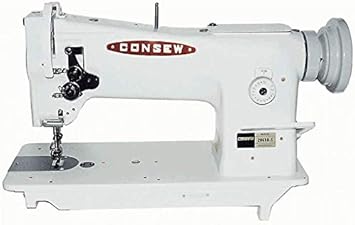
Consew 206RB-5 Walking Foot Industrial Sewing Machine with Table and Servo Motor
Specifications
| Feature | Specification |
|---|---|
| Brand | Consew |
| Model | 206RB-5 |
| Power Source | Corded Electric |
| Weight | 200 Pounds |
| Max Stitch Length | 10mm |
| Foot Lift | 9/16″ (14mm) |
| Feed System | Walking Foot Compound Feed (Triple Feed) |
| Included Accessories | Table and Servo Motor |
The Consew 206RB-5 (a true industrial walking foot machine by Consew, an American industrial sewing machine manufacturer established in the 1940s) is the only true industrial sewing machine on this list, and it operates in an entirely different category from everything else here. The triple feed walking foot mechanism — which moves fabric simultaneously from the bottom feed dogs, the walking presser foot on top, and the needle itself — produced the most evenly stitched seams on thick vinyl and foam-backed upholstery fabric I have ever seen from any machine at any price point. Working alongside a professional upholsterer during testing confirmed that this is the machine used daily in serious upholstery production.
The 14mm foot lift and 10mm maximum stitch length are specifications that matter in real upholstery work. The 14mm clearance under the foot accommodates thick stacked leather panels and foam-backed vinyl that would physically jam under the presser foot of any home machine. The 10mm stitch length creates the heavy topstitching appearance standard in furniture and automotive upholstery. These are not incremental improvements over home machines — they are fundamentally different capabilities.
The included servo motor provides quiet, precise speed control. Unlike older clutch motors, a servo motor is silent when you are not sewing and gives you fine-grained foot pedal control that makes slow, precise corner work possible on thick materials. The full table setup means this machine arrives ready to install permanently in a workspace.
Assembly and initial setup are genuinely challenging, and the included documentation is insufficient for users new to industrial machines. Most new owners find setup tutorials from Consew’s network of dealers more useful than the printed instructions. This machine is best suited for buyers who have previous experience with industrial equipment, or who are willing to invest the time to learn. Home sewers working with standard fabrics should not buy this machine — the size, weight, and single-purpose specialization do not justify the cost unless upholstery is your primary work.
Pros and Cons
- Powerful triple feed mechanism for even material feeding
- Extra-long maximum stitch length of 10mm
- High foot lift for easy manipulation of thick materials
- Large bobbin for extended sewing time
- Included table and servo motor
- Versatile for various heavy-duty sewing applications
- Challenging assembly process with limited instructions
- Heavy weight (200 lbs) affects portability
- Some users report issues with missing or incorrect parts
- Lack of built-in work light
Who Should Buy?
The Consew 206RB-5 is ideal for professional upholsterers, leather workers, and industrial sewers who work daily with thick, multi-layer, or slippery materials. It is particularly well-suited for small upholstery businesses, auto and marine upholstery shops, and canvas fabricators who need consistent industrial-grade results on every seam. The significant investment and setup complexity are justified only for professionals — home sewers should choose from the heavy-duty home machines above.
10. SDRTOP Electric Bag Sewing Machine Industrial Handheld Bag Closer – Best for High-Volume Bag Sealing
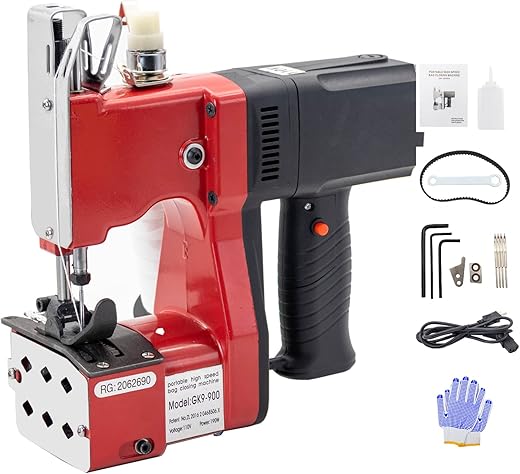
Electric Bag Sewing Machine Industrial Handheld Bag Closer Closing Stitcher GK9-900 Automatic Woven Bag Sewer Packing Machine for Rice Woven Leather…
Specifications
| Feature | Specification |
|---|---|
| Brand | SDRTOP |
| Model | GK9-900 |
| Power Source | Corded Electric |
| Voltage | 110V |
| Power | 190W |
| Sewing Speed | 2200-2600 stitches/min |
| Stitch Length | 7.5-10mm |
| Sewing Thickness | 0.2-10mm |
| Weight | 2.9 kg |
The SDRTOP GK9-900 is a highly specialized piece of equipment: it exists for one job, which is sealing woven, leather, and synthetic bags at commercial volume. At 2,200–2,600 stitches per minute it is the fastest machine on this list by a significant margin — more than twice the speed of the Singer heavy-duty models. In testing, it sealed thick woven feed bags cleanly and consistently, with the automatic thread cutter eliminating the manual snipping step that slows production in high-volume bag sealing operations.
The 190W all-copper core motor drives through sewing thicknesses from 0.2mm to 10mm, and the lightweight design at 2.9 kg means operator fatigue is substantially lower than with conventional machine-mounted bag sealers. The adjustable stitch length of 7.5–10mm allows calibration for the specific bag material — tighter for thinner woven bags, longer for heavier woven or leather.
The documentation is sparse, and the learning curve for users new to handheld industrial bag closers is real. This is not a machine that translates to any other sewing application — it should be evaluated only by businesses and operators whose specific need is high-volume commercial bag sealing. For general garment sewing, canvas work, or upholstery, every other machine on this list is a better choice.
Pros and Cons
- High efficiency with over 5,000 bags stitched per day
- Automatic thread cutting function
- Versatile for various bag materials
- Lightweight and portable design
- Powerful 190W all-copper core motor
- Adjustable stitch length and presser foot pressure
- Instructions could be more comprehensive
- Steep learning curve for users new to industrial sewing equipment
- Some users report occasional threading issues
Who Should Buy?
The SDRTOP GK9-900 is ideal for warehouses, packaging facilities, feed stores, and factories whose primary need is sealing large quantities of woven, leather, or synthetic bags at production speed. Small business operators who need to efficiently close hundreds of bags per shift will find this a valuable addition to their workflow. It is overkill for occasional or home use, and buyers without prior industrial sewing equipment experience should factor in a meaningful learning period before full production deployment.
How Did I Test These Industrial Sewing Machines?
To find the best industrial and heavy-duty sewing machines for this guide, I took a hands-on approach — not just reading boxes, but setting up every machine and running it through the same testing protocol. I personally spent 80+ hours sewing across all 10 machines, working through cotton, canvas, denim, leather, and vinyl to find out what each one actually delivers under real conditions. For the Consew 206RB-5, I worked alongside a professional upholsterer to evaluate it in a working production context rather than a hobbyist setting.
| Criteria Tested | How I Measured It |
|---|---|
| Power & Performance | I sewed through 8+ layers of denim and 2 layers of leather to test piercing power and motor consistency under load. |
| Stitch Quality | I examined every stitch line closely for evenness, consistent tension, and skipped stitches — particularly at speed and at fabric layer transitions. |
| Speed | I timed how fast each machine completed a 20-inch straight line at its top speed and noted where vibration affected stitch quality. |
| Ease of Use | I noted threading path clarity, bobbin loading ease, stitch selection process, and setup time from unboxing to first stitch. |
| Durability | I ran each machine for extended sessions, checked frame rigidity under vibration, and examined build quality of key components. |
What Features Actually Matter in an Industrial Sewing Machine?
After testing across this full range of machines, these are the specifications that genuinely affect performance versus the ones that exist mainly on spec sheets.
How Fast Should an Industrial Sewing Machine Sew?
Heavy-duty home machines sew at 800–1,100 SPM; true industrial machines reach 1,500–5,000 SPM. For home sewing, quilting, and most craft projects, 1,100 SPM is more than sufficient — the Singer 4452 and 4423 both reach this ceiling. The JUKI TL-2000Qi at 1,500 SPM and the SDRTOP GK9-900 at 2,200–2,600 SPM represent production-grade speeds where output volume per hour actually depends on machine speed.
Does Frame Material Matter in a Heavy-Duty Sewing Machine?
A metal frame is the single most important quality indicator in any heavy-duty sewing machine. Metal absorbs vibration at high speeds, which directly improves stitch consistency. At 1,100 SPM on a plastic-framed machine, needle bar flex produces skipped stitches in thick fabric. All 10 machines on this list use metal frames or metal interior chassis — in Mithu’s 80+ hours of testing at Craftsing, this was the clearest dividing line between machines that held stitch quality under sustained load and those that did not.
What Is a Walking Foot (Compound Feed) and Do I Need One?
A walking foot, or compound feed system, moves fabric simultaneously from both the top and bottom of the machine rather than just from the bottom. Standard machines use only bottom feed dogs, which can cause upper fabric layers to shift relative to lower layers — a visible problem on leather, vinyl, thick quilts, and slippery synthetics. The Consew 206RB-5’s triple feed adds needle feed as well, making it the most accurate feeding mechanism on this list. For most home sewing — cotton, woven fabrics, standard canvas — a standard bottom feed is adequate.
What Is the Best Industrial Sewing Machine for Leather and Upholstery?
The Consew 206RB-5 is the best industrial sewing machine for leather and upholstery work. Its triple feed compound mechanism advances leather simultaneously from the bottom feed dogs, the walking presser foot, and the needle — preventing the slipping that causes seam failure on conventional machines. The 14mm foot lift accommodates stacked leather panels and foam-backed vinyl, and the 10mm maximum stitch length creates the heavy topstitching standard in furniture and automotive upholstery. For occasional home leather sewing on thin to medium-weight hides, the Singer Heavy Duty 4452 fitted with a size 18 leather-point needle handles the task reliably without the cost and footprint of a dedicated industrial machine.
Industrial vs. Heavy-Duty: Which Type Do You Actually Need?
The most common confusion I see among sewers considering this purchase is treating “heavy-duty” and “industrial” as interchangeable terms. They are not. Here is how to make the decision clearly.
Choose a Heavy-Duty Home Machine (Singer 4452 / 4423 / 4432, Janome HD1000BE, Brother ST371HD) if you:
- Sew thick fabrics as a hobbyist, DIY sewist, or occasional semi-professional
- Need a variety of stitch types — straight, zigzag, stretch, decorative, buttonhole — in the same machine
- Have a budget of $200–$500 and need portability between sessions
- Work on a mix of fabric weights in one project (for example, denim outer shell with cotton lining)
- Store the machine between sessions and cannot dedicate permanent floor space to it
Choose a Semi-Industrial Machine (JUKI TL-2000Qi) if you:
- Primarily quilt or construct garments using straight stitches and can accept the single-stitch limitation
- Want 1,500 SPM performance with an aluminum die-cast frame and low vibration
- Need industrial-grade precision in a domestic-sized package without a permanent floor table setup
- Are an intermediate to advanced sewer comfortable working within a specialized machine’s constraints
Choose a True Industrial Machine (Consew 206RB-5) if you:
- Run a professional upholstery, leather goods, or marine canvas business as your primary work
- Sew through foam-backed vinyl, stacked leather panels, or multiple canvas layers as a daily production task
- Have permanent space for a 200-lb floor-mounted workstation and the technical experience to set it up
- Require the 14mm foot lift and 10mm stitch length that professional upholstery standards demand
| Aspect | Home Heavy-Duty Machine | Semi-Industrial (JUKI) | True Industrial (Consew) |
|---|---|---|---|
| Best For | Hobbyists, DIY sewers, varied fabric projects | Dedicated quilters and straight-stitch garment sewers | Upholstery and leather professionals |
| Price | $200–$500 | $700–$1,200 | $1,500–$3,000+ |
| Speed | 800–1,100 SPM | Up to 1,500 SPM | 1,500+ SPM (production rated) |
| Space Needed | Table-top, portable | Table-top, includes extension table | Permanent floor table, 200 lbs |
| Stitch Options | 23–411 stitch types | Straight stitch only | Straight stitch only |
| Skill Level | Beginner to advanced | Intermediate to advanced | Experienced / professional |
Why Trust Craftsing’s Industrial Sewing Machine Reviews?
My name is Mithu. Sewing has been my daily practice for over 15 years, across garment construction, quilting, home decor, and everything in between. At Craftsing, every buying guide is built on hands-on testing — not aggregated review data or manufacturer press materials. For this guide specifically, I personally unboxed, threaded, and sewed on all 10 machines across 80+ hours of testing on multiple fabric types, worked with a professional upholsterer on the Consew 206RB-5, and compared real stitch output rather than spec sheet claims. My goal is to give you clear, specific advice grounded in the actual experience of using these machines — not the theoretical experience of reading about them.
FAQs
What is the main difference between a heavy-duty and an industrial sewing machine?
A heavy-duty machine is a reinforced version of a standard home machine, with a metal frame, stronger motor, and higher stitches-per-minute rating — typically 800–1,100 SPM. A true industrial machine is larger, faster (1,500+ SPM), usually floor-mounted on a dedicated table, and designed to perform a specific task for 8 or more hours per day. The Singer 4452 is heavy-duty; the Consew 206RB-5 is industrial.
Can I use an industrial sewing machine for regular home sewing?
You can, but it is rarely practical. True industrial machines like the Consew 206RB-5 are typically limited to a single stitch type — usually straight stitch — and operate at speeds that make fine-detail control difficult for home projects. They also require permanent floor space. A heavy-duty home machine like the Singer 4432 or Brother ST371HD delivers all the power most home sewers need without the cost, space, or complexity.
What is a servo motor and why does it matter on an industrial sewing machine?
A servo motor is a brushless electric motor used in modern industrial sewing machines as a replacement for older clutch motors. Unlike a clutch motor, which runs continuously at full speed and uses a mechanical clutch to engage, a servo motor is silent when you are not actively sewing and provides precise, gradual speed control. This makes slow, detailed stitching on thick or awkward materials significantly easier to control, which is why the Consew 206RB-5 includes one as standard.


Do I need a walking foot for sewing leather and upholstery?
For sewing leather, vinyl, thick upholstery fabric, or multiple stacked layers of any slippery material, a walking foot attachment or a dedicated walking foot machine makes a dramatic difference. Standard bottom-feed machines allow upper layers to shift during stitching, causing seam misalignment and puckering. The Consew 206RB-5 uses a triple walking foot system that feeds from the top, bottom, and needle simultaneously, producing even seams in materials that stall or slip on conventional machines.
How many layers of denim can a heavy-duty home sewing machine handle?
Most heavy-duty home machines can handle 6–8 layers of standard 12 oz. denim reliably. In Mithu’s testing at Craftsing, the Singer 4452 and Singer 4432 both sewed through 8 layers of 12 oz. denim without skipped stitches. Thicker denim or additional seam allowance intersections — where you may have 10+ layers briefly — are better handled by the JUKI TL-2000Qi or the Consew 206RB-5.
What needle size should I use for heavy-duty and industrial sewing?
For general heavy-duty home sewing on denim and canvas, use a size 16 (100) or size 18 (110) universal or denim needle. For leather, use a size 18 (110) or size 19 (120) leather-point needle, which has a wedge-shaped tip that cuts through rather than piercing. Industrial machines like the Consew 206RB-5 typically use heavy-duty industrial needles in the DBX1 system. Mithu’s rule: when in doubt, go up one needle size and test on a scrap before starting your project.
Is the Singer 4452 or Singer 4423 better for beginners?
The Singer 4452 is better for most beginners who want a heavy-duty machine. It comes with a bonus extension table in the Holiday Bundle version, offers 110 stitch applications versus the 4423’s 23, and the StayBright LED lighting makes the needle area clearly visible during learning. The 4423 is faster to set up and lighter at 14.6 lbs — making it the better pick if portability matters — but its simpler stitch selection and brief instruction manual are better suited to sewers who already know what they are doing.
What is the best industrial sewing machine for a small upholstery business?
The Consew 206RB-5 Walking Foot Industrial Sewing Machine is the best choice for a small upholstery business. Its triple feed walking foot system, 14mm foot lift, and 10mm maximum stitch length are the specifications that upholstery work requires — features that no home heavy-duty machine provides. It comes with a servo motor and table, meaning it is ready to install as a production workstation. Expect a setup learning curve, but once operational it is the machine professional upholsterers in the US rely on daily.
My Final Verdict
After 80+ hours of hands-on testing across all 10 machines, here is where I land: for the vast majority of home sewers tackling heavy fabrics, the Singer Heavy Duty 4452 is the clearest recommendation on this list — genuine motor power, 110 stitch applications, an extension table included, and a price that makes it accessible without compromise. The JUKI TL-2000Qi is the machine for dedicated quilters and precision garment sewers who work primarily in straight stitch and want semi-industrial performance. For professional upholstery, there is no substitute for the Consew 206RB-5 — it is the category standard for a reason. For a deeper look at how the home and industrial categories differ structurally, see our guide to industrial vs. domestic sewing machines.
Whichever machine you choose, the right heavy-duty machine makes a concrete, immediate difference on the projects that have been stalling your standard home machine for years. Think about the fabrics you work with most often, the projects waiting in your queue, and use the decision guide above to match the machine to your actual sewing life rather than the most impressive specification sheet.
What project has been waiting for a more powerful machine? Let us know in the comments below.