


Over the past several months, I’ve tested more than 20 rulers and templates on domestic machines, longarm setups, and cutting mats covered in everything from quilting cotton to linen blends. I looked for clarity, grip, thickness, and whether a tool actually helped me produce better quilts — not just prettier packaging. In this guide, I’m sharing the 13 best quilting rulers and templates that earned a permanent spot in my sewing room, and I’ll walk you through exactly how to pick the right one for your next project.
Quick-Reference Comparison Table
| Product | Best For | Buy Now |
|---|---|---|
| Kapyoo Freemotion Quilting Rulers and Templates Set | Best overall template set for free-motion beginners | Buy now |
| Kapyoo 3Pcs Free Motion Quilting Rulers and Templates (Themed) | Easy-to-use themed templates for pet projects | Buy now |
| REDANHA 6 Pieces Hexagon Quilting Template Set | Precise hexagon blocks and English paper piecing | Buy now |
| Kapyoo 3Pcs Free Motion Quilting Rulers and Templates (Whirlpool) | Continuous whirlpool designs | Buy now |
| Dabline 13 PCs Quilting Template Set | Comprehensive kit with frame and gloves | Buy now |
| Hovesty 5Pcs Creative Quilting Rulers and Templates | Creative scrap-friendly patterns | Buy now |
| 12.5″ x 12.5″ Slotted Quilting Ruler | Fast, accurate strip cutting | Buy now |
| Fiskars Sewing Ruler 6″ x 24″ | Versatile everyday cutting and measuring | Buy now |
| ARTEZA Quilting Rulers Set of 4 | Multiple square sizes in one affordable set | Buy now |
| Creative Grids Quilt Ruler 6-1/2″ x 24-1/2″ | Large quilting projects and bolt cuts | Buy now |
| Omnigrid Non-Slip Quilter’s Ruler 6″ x 24″ | Non-slip cutting on challenging fabrics | Buy now |
| Omnigrid Ruler 2-1/2″ x 8″ | Compact portable ruler for small cuts | Buy now |
| TrueCut TrueGrips Non-Slip Ruler Grips | Adding grip to any ruler | Buy now |
What to Look for in Quilting Rulers and Templates
The material of a ruler or template is the first thing I check, and it’s not just about durability. Acrylic is the standard — heavy-duty acrylic resists cracking when you drop it on a hardwood floor, which happens more than I’d like to admit. Thickness matters differently for cutting rulers versus free-motion templates. For cutting rulers, a 0.1-inch to 0.15-inch acrylic strikes the best balance between stability and low profile — thin enough that your rotary cutter blade rides the edge cleanly, thick enough that the ruler doesn’t flex under your palm. For machine quilting templates, 4mm to 5mm thickness keeps the ruler foot from hopping the edge and protects your fingers from the needle. Too thin, and the foot rides over; too thick, and your presser foot can’t clear it without adjustment.
Visibility is the make-or-break factor that nobody talks about until they’re squinting at a dark batik at 10 p.m. Dual-color grid lines — black on one axis, yellow or green on the other — make markings readable on both light and dark fabrics. Laser-cut edges give a smoother cutting surface and reduce the tiny nicks that rotary blades pick up over time. Markings should include 1/8-inch increments as a minimum, and angle lines at 30, 45, and 60 degrees will cover the vast majority of quilting cuts. Left- and right-hand numbering is a bonus if you switch cutting directions.
Grip is where many otherwise excellent rulers fall short. Non-slip backing or silicone grip dots prevent the infuriating slide that turns a straight cut into a wonky one. Some rulers have grip built into the acrylic surface, while others rely on add-on dots or strips. Either approach works, but if you often cut slippery fabrics like satin or silk, built-in grip is worth prioritizing. For free-motion templates, the grip comes from the template’s weight and the silicone finger pads or grips that keep it planted while you move the quilt sandwich underneath.
Compatibility with your sewing machine matters specifically for template quilting. Most templates work with domestic machines that accept a ruler foot, but low-shank machines sometimes struggle with templates thicker than 4mm. Before buying a set of free-motion templates, measure the clearance under your ruler foot with the foot lowered — if you’ve got less than 5mm of space, stick to templates labeled 3mm to 4mm thick. Cutting rulers have no such limitation; they work on any cutting mat with any rotary cutter.
Common Mistakes to Avoid
The most common error I see isn’t picking the wrong ruler — it’s using a ruler without grip and pressing down too hard to compensate. Pressure increases the chance of the ruler rotating under your hand, and the harder you push, the more dangerous the slip becomes when the rotary cutter catches. Use a light, steady pressure and let the grip (or grip dots) do the work. Another mistake is cutting toward yourself. Always cut away from your body with a rotary cutter, and position the ruler so the bulk of the fabric is to the left of the blade (for right-handed cutters). It feels awkward for the first few projects, but it prevents the most common quilting injury.
Beginners often buy a single large ruler and expect it to handle everything. A 6″ x 24″ ruler is versatile, but trying to square a 3-inch block with that behemoth is like swatting a fly with a tennis racket. You’ll need a smaller square ruler — 6.5″ or 4.5″ — for block trimming. In template quilting, the mistake is rushing. Free-motion templates require slow, deliberate movement; speeding through a stipple pattern with a template is the fastest way to break a needle or sew through the edge of the acrylic. Slow down until the rhythm of moving the quilt and following the template edge becomes muscle memory.
The 13 Best Quilting Rulers and Templates
1. Kapyoo Freemotion Quilting Rulers and Templates Set — Best Overall Template Set
Kapyoo 3Pcs Free Motion Quilting Rulers and Templates Set Quilting Templates for Machine Quilting Supplies Stencils with Non-Slip Grips (Series B)
Key specs:
| Feature | Specification |
|---|---|
| Brand | Kapyoo |
| Material | Acrylic |
| Dimensions | 9.2″L x 6.1″W |
| Thickness | 0.16 inch (4mm) |
| Weight | 0.72 Pounds |
| Set Includes | 3 quilting templates, 16 non-slip grips |
| Compatibility | Most domestic sewing machines with correct ruler foot |
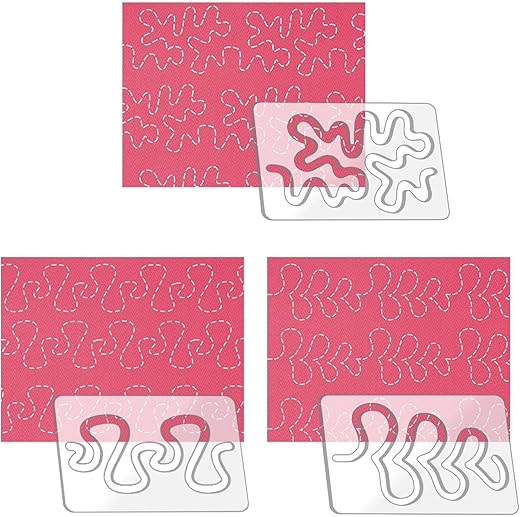
I unboxed this set in early September 2024 and used it that same afternoon on a scrappy star quilt that needed background fill. The three templates nest together without scratching, and the 4mm thickness slid under my Janome ruler foot with daylight to spare. That first session, I finished a double-bed-sized quilt top in half the time I’d budgeted — the open shapes let me stitch continuous arcs without stopping to cut thread between passes. The 16 included non-slip grips are tiny silicone dots that stick to the template back; I placed four on each template and never had one slide, even when I got overconfident and sped up.
The templates cover enough design variety to handle most free-motion fills: one is a gently curved arc for meandering, one does nested circles for flower-like motifs, and the third creates an interlocking wave pattern that looks far more complex than it is. The acrylic is clear enough that I could see my quilt top markings through it, which matters when you’re trying to hit a specific intersection. Over six weeks of regular use, the edges have not chipped or developed burrs, and I’ve cleaned them with nothing more than a microfiber cloth.
One thing I noticed around week three: if you push the template hard against the needle, the 4mm thickness can deflect a size 75/11 needle just enough to cause skipped stitches. Back the foot off by a hair and the problem disappears, but it’s a tendency worth knowing before you start.
| Pros | Cons |
|---|---|
| High-quality transparent acrylic with excellent clarity for seeing quilt markings underneath | Pushing the template too firmly against the needle can deflect lighter-weight needles and cause skipped stitches |
| Open-edge design allows continuous stitching without stopping to cut thread between template sections | Not directly compatible with longarm machines — the 4mm thickness may require a modified hopping foot |
| 16 non-slip silicone grips included keep templates planted on slick fabric without residue | No printed instructions included in the box; video tutorials are online but not linked in packaging |
Expert note: Place the non-slip grips near the outer edges of each template rather than the center — this maximizes stability and keeps the middle clear so you can see your needle position at all times.
2. Kapyoo 3Pcs Free Motion Quilting Rulers and Templates Set (Themed) — Best Themed Designs for Pet Projects
3Pcs Free Motion Quilting Rulers and Templates Set Butterfly Pet Footprint Bone Pattern 1/8 inch Thick Acrylic Quilting Templates for Domestic Sewing…
Key specs:
| Feature | Specification |
|---|---|
| Brand | Kapyoo |
| Material | Acrylic |
| Dimensions | 5.5″L x 5.5″W |
| Thickness | 1/8 inch (3mm) |
| Set Includes | 3 templates (butterfly, pet footprint, bone), 12 non-slip grips |
| Compatibility | Most low-shank domestic sewing machines |
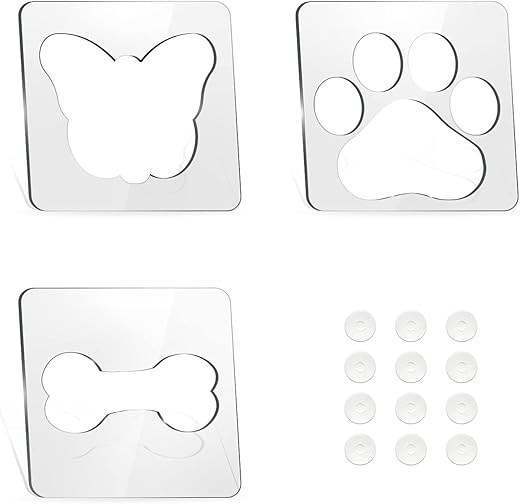
In October 2024 I made a memory quilt for a friend whose senior dog had just passed, and this template set turned a simple patchwork layout into something meaningful. The bone and paw-print templates stitched out cleanly on a 50-weight cotton thread, and the butterfly design added a nice decorative border element. At 3mm thick, these templates are noticeably thinner than the 4mm Kapyoo set above, which means they slide under low-shank ruler feet with zero modification — a real advantage if you’re using an older Singer or Brother machine.
The small 5.5-inch square size is both a strength and a limitation. For a single block or a corner accent, one pass covers the space quickly. But on a larger quilt, you’re repeating the motif every five inches, and the repetition shows if your placement isn’t exact. I found it helpful to mark registration points with a water-soluble pen before starting, which kept the spacing consistent. The 12 included non-slip grips are the same silicone dots from the larger set, and they work just as well on these thinner templates.
One unique advantage: because these templates are small and light, I could maneuver them easily around curved seams and into the tight spaces near the quilt edge where larger templates simply don’t fit. The themed shapes won’t replace a general-purpose meander template, but for pet quilts, kids’ quilts, or whimsical borders, they fill a niche that nothing else in my drawer covers.
| Pros | Cons |
|---|---|
| Unique themed designs (butterfly, paw print, bone) that are genuinely hard to find in other template sets | Small 5.5-inch motif size means frequent repositioning on larger quilts, which can create visible spacing inconsistencies |
| 3mm thickness clears low-shank domestic machines without any foot-height adjustments | The thin profile flexes under heavy-handed pressure — pressing too hard causes the template to bow and the stitch line to drift |
| 12 non-slip grips included provide solid grip for such light templates | Template edges are sharp on one side from the laser-cutting process and can snag loose-weave fabric if not deburred with fine sandpaper first |
Expert note: Run your fingertip along the cut edges before first use; if you feel any sharpness, a few passes with 400-grit sandpaper will smooth them out and prevent fabric snagging.
3. REDANHA 6 Pieces Hexagon Quilting Template Set — Best for Hexagon Quilts and English Paper Piecing
6 Pieces Hexagon Quilting Template with 1/4 Inch Seam Allowance, Hexagon Acrylic Quilting Rulers and Templates for Sewing DIY Manual Crafts Including 1inch,…
Key specs:
| Feature | Specification |
|---|---|
| Brand | REDANHA |
| Number of Items | 6 |
| Sizes Included | 1″, 1.5″, 2″, 3″, 4″, 5″ |
| Material | Acrylic |
| Seam Allowance | 1/4 inch |
| Thickness | Approximately 1/8 inch |
| Color | Clear |
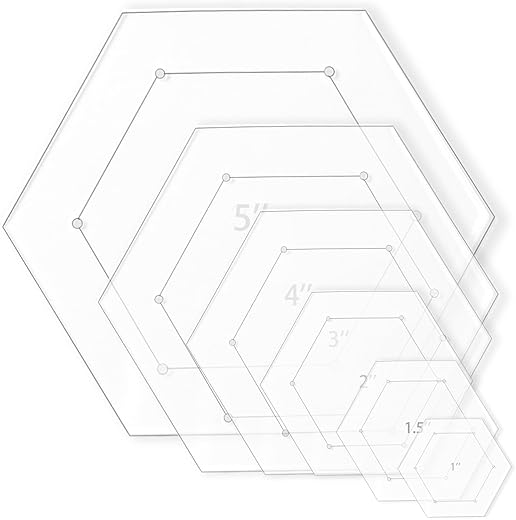
These templates aren’t for machine sewing — they’re marking and cutting templates, and they solve a very specific problem for hexagon lovers. In May 2024 I started an Ultimate Beginner’s Guide to English Paper Piecing: Essential Techniques for Stunning Hexagon Quilts”>English paper piecing grandmother’s flower garden quilt, and these templates replaced the cardstock shapes I’d been tracing. The 1/4-inch seam allowance is built into the template edge, so you place the template on your fabric, trace around it with a pencil or chalk marker, and cut — no measuring, no adding a seam allowance by eye. Across 200 hexagons, that built-in allowance saved me hours of fiddly ruler work.
Six sizes from 1 inch to 5 inches cover virtually every hexagon project imagination, from tiny 1-inch fussy-cut flowers to 5-inch border accents. The acrylic is thinner than I’d like for a cutting ruler — about 1/8 inch — which means you need to hold it steady while tracing, but it also makes storage extremely easy. All six templates stack into a pile thinner than half an inch and fit neatly in a drawer. The marking holes are located at the seam intersections, but they’re quite small; I had to switch from a dull pencil to a fine 0.5mm mechanical pencil to get consistent marks through the holes.
One honest frustration: the protective paper layer on each template when you first receive them is aggressively adhered. I spent 20 minutes peeling tiny corners of brown paper off all six pieces, and I scratched one template slightly with my fingernail in the process. Soak them in warm soapy water for ten minutes before peeling — the paper slides right off.
| Pros | Cons |
|---|---|
| Six-size range from 1″ to 5″ hexagons covers virtually every EPP project scale | Marking holes are too small for standard pencils — usable only with fine mechanical pencil leads |
| Built-in 1/4″ seam allowance on every template eliminates manual measuring and improves cutting speed | The 1/8-inch acrylic is thin and can shift while tracing unless secured with grip dots (not included) |
| Clear acrylic lets you fussy-cut specific fabric motifs precisely within the hexagon shape | Aggressive protective paper requires soaking in warm water to remove without scratching the acrylic |
Expert note: If you use these for rotary cutting instead of tracing, stick a few silicone grip dots on the template back; the thin acrylic lacks weight, and the rotary cutter pressure will push it off your cutting line without grip reinforcement.
4. Kapyoo 3Pcs Free Motion Quilting Rulers and Templates (Whirlpool) — Best for Continuous Whirlpool Designs
Kapyoo 3Pcs Free Motion Quilting Rulers and Templates – Quilting Stencil with Non-Slip Grips (Whirlpool Design Series)
Key specs:
| Feature | Specification |
|---|---|
| Brand | Kapyoo |
| Number of Items | 3 templates, 16 non-slip grips |
| Material | Acrylic |
| Template Dimensions | 9.2″ x 6.1″ |
| Thickness | 0.16 inches (4mm) |
| Design | Whirlpool Series |
| Compatibility | Most domestic sewing machines with correct ruler foot |
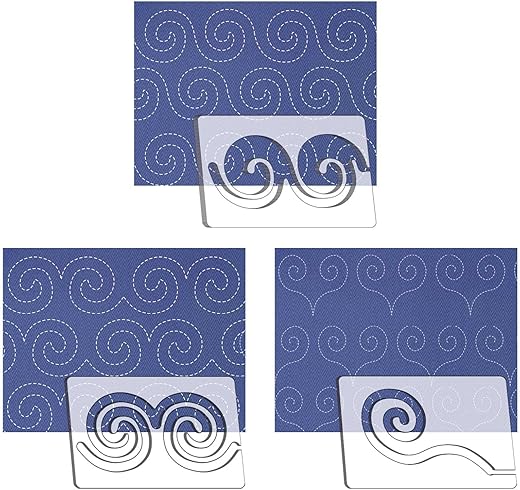
I tested the Whirlpool series alongside the original Kapyoo set in September 2024, and what sets these apart is the open-edge design that truly eliminates the need to cut thread between sections. On a solid navy backing where I wanted an all-over whirlpool texture, I stitched for 45 minutes without stopping once — just moved from template edge to template edge, pivoting the quilt under the needle. The result was a dense, swirling pattern that looked like custom longarm work. The whirlpool shape creates a spiral effect that radiates outward, so it works beautifully on medallion quilts or any top where you want the quilting to draw the eye toward the center.
The same 4mm thickness and clear acrylic apply here as on the original Kapyoo set, with the same compatibility caveat: these work great on most domestic machines with a ruler foot, but longarm users will need to verify their hopping foot clearance. The 16 non-slip grips are included, and I’ve learned to apply them immediately out of the box — skipping this step leads to template drift on slippery backing fabrics like satin or high-thread-count cotton.
The confined space inside the tighter curl of the smallest template took some getting used to. My first few passes produced stitches that crowded the inner edge, and I had to consciously slow my hand speed to let the needle follow the curve without binding. After about fifteen minutes of practice on a scrap sandwich, the motion became natural, and the results were consistently smooth.
| Pros | Cons |
|---|---|
| True open-edge design enables genuinely continuous stitching without thread cuts | The tightest inner curve on the smallest template requires slow, deliberate movement to avoid needle bind |
| Excellent for all-over background fill, especially on medallion and center-focal quilts | The same 4mm thickness limitation applies — low-shank machines without a high-clearance ruler foot may struggle |
| 16 non-slip grips included for immediate setup stability | No printed instructions or suggested patterns included; you must experiment or find online videos independently |
Expert note: When stitching the inner spiral, reduce your machine speed by about 20% from your normal free-motion pace; the tighter radius demands more needle control, and speed magnifies any wobble.
5. Dabline 13 PCs Quilting Template Set — Best Comprehensive Kit with Accessories
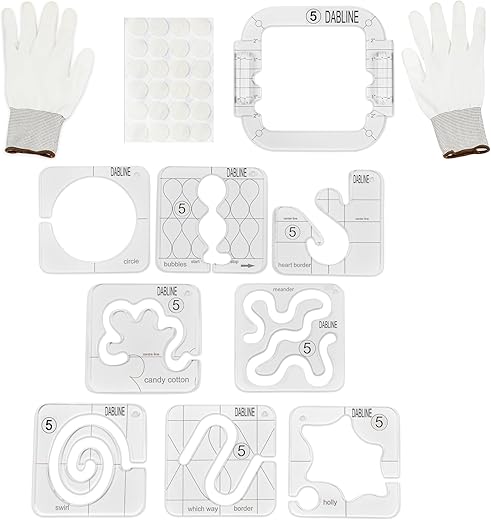
DABLINE 13 PCs Quilting Template Set Includes 8 Quilting Templates, Quilting Frame/Gloves/Stickers/Guide. Free Motion Quilting Rulers and Templates
Key specs:
| Feature | Specification |
|---|---|
| Brand | Dabline |
| Number of Items | 13 pieces total |
| Material | Acrylic |
| Template Thickness | 5mm |
| Included Accessories | Quilting frame, gloves, stickers, guide |
| Compatibility | Varies by sewing machine model |
This is the set I recommend to someone who wants to try template quilting without buying tools piecemeal. I ordered the Dabline kit in July 2024 for a quilting retreat where I was teaching free-motion basics, and it became the go-to classroom set because it includes everything: 8 templates of varying shapes, a quilting frame that holds the template taut over the fabric, two quilting gloves with rubberized fingertips, non-slip stickers, and a printed guide booklet. The templates are 5mm thick — noticeably chunkier than the Kapyoo sets — which makes them extremely stable under the ruler foot but also means they demand a high-shank machine or a ruler foot with generous clearance.
The included quilting frame solves a real problem: keeping a template flat and stationary while you move the quilt underneath it. The frame has handles that let you grip and guide the whole assembly without putting your fingers near the needle. During the retreat, two students with arthritis in their hands said the frame made template quilting accessible for the first time. The gloves are a nice bonus — rubberized fingertips grip the quilt back and reduce the hand fatigue that comes from moving a heavy quilt sandwich for hours.
The downside is compatibility. On my low-shank Janome, I had to swap to a high-shank ruler foot adapter to get enough clearance for the 5mm thickness. One student with a basic Singer couldn’t use the templates at all without modifying her presser foot assembly. The templates also have a learning curve: their slick finish glides beautifully over fabric, but they can slide in the frame if the non-slip stickers aren’t applied in exactly the right spots.
| Pros | Cons |
|---|---|
| All-in-one kit with 8 templates, frame, gloves, stickers, and guide — nothing else to buy | 5mm thickness is incompatible with many low-shank domestic machines without a high-clearance ruler foot modification |
| Quilting frame with handles stabilizes the template and keeps fingers safely away from the needle | Templates can slide inside the frame during use unless the non-slip stickers are positioned precisely at the contact points |
| Printed guide booklet shows patterns achievable with each template, which is rare in this product category | The slick template surface, while great for fabric glide, can be challenging to grip when repositioning quickly |
Expert note: Before your first project, attach the non-slip stickers to both the template edges that contact the frame and the bottom of the frame itself; this double grip prevents the most common frustration of the template shifting mid-stitch.
6. Hovesty 5Pcs Creative Quilting Rulers and Templates — Best for Creative Scrap-Friendly Patterns
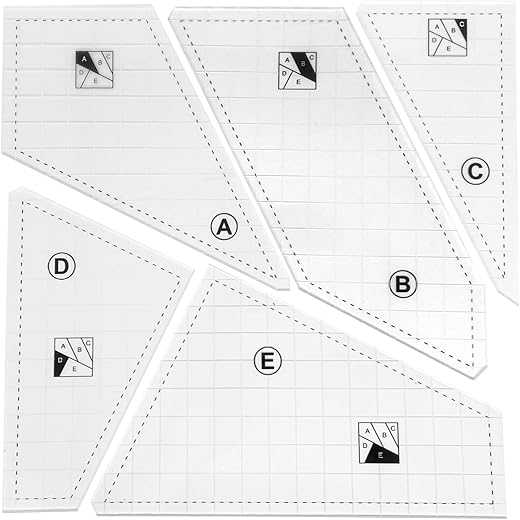
Quilting Rulers and Templates, 5Pcs Creative Quilting Cutting Template Quilt Templates Acrylic for Cutting Patterns, Quilt Ruler Set Quilting Supplies for…
Key specs:
| Feature | Specification |
|---|---|
| Brand | Hovesty |
| Number of Items | 5 pieces |
| Material | Acrylic |
| Template Size | 9″ x 9″ |
| Seam Allowance | 1/8 inch included |
| Compatibility | Works with rotary cutters |
These aren’t free-motion quilting templates — they’re cutting templates for piecing, and they excel at turning fabric scraps into coherent quilt blocks. I pulled out the Hovesty set in August 2024 after accumulating a bin of 2-inch and 3-inch scrap strips that were too small for any ruler-based cutting system. The templates let me position shapes over specific parts of a printed fabric — centering a flower motif in a petal shape, for example — and cut with a rotary cutter. The 9-inch square size produces blocks that finish around 8.5 inches, which is a useful module for samplers and scrap quilts.
The acrylic is clear and moderately thick, stable enough for rotary cutting without flexing. The 1/8-inch seam allowance is narrower than the standard quarter-inch, so if you’re used to sewing with a quarter-inch foot, you’ll need to adjust your needle position or mark your machine with tape to account for the smaller seam. I learned this the hard way when my first block came out half an inch undersized. Once I adjusted, the accuracy was consistent.
The biggest gap is the lack of instructions. The set includes five templates with no suggested layouts or block diagrams. You’re expected to know how to combine the shapes into a quilt block, which is fine for an intermediate quilter but would frustrate a beginner. I ended up sketching several layout options on graph paper and found combinations that produced flower-like and circular medallion blocks. If you enjoy creative freedom and experimenting, this set will reward you. If you want a recipe to follow, pair it with a quilt block design book.
| Pros | Cons |
|---|---|
| Excellent for using fabric scraps by positioning templates over specific motifs | No included instructions or block layout diagrams — beginners will need external pattern resources |
| Clear acrylic with good thickness for rotary cutter stability without flexing | The 1/8-inch seam allowance deviates from the standard quarter-inch and requires machine adjustment |
| Five distinct shapes combine into multiple block designs, offering creative flexibility | Template edges lack a non-slip backing, so they can shift on smooth fabrics without added grip dots |
Expert note: Stick masking tape along your sewing machine bed at the 1/8-inch mark until you dial in the seam allowance; the templates produce accurate blocks, but only if you’re sewing with the matching seam width.
7. 12.5″ x 12.5″ Slotted Quilting Ruler — Best for Fast Strip Cutting
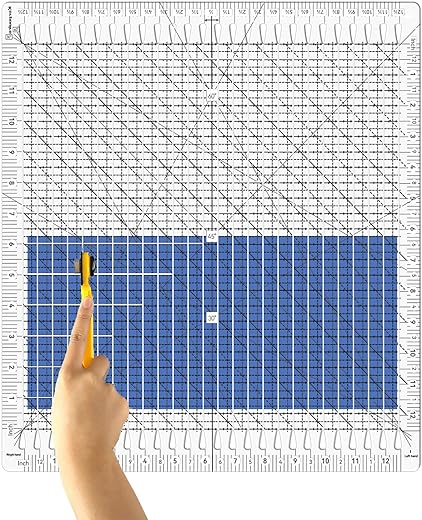
Quilting Ruler- 12.5 * 12.5" Slotted Rulers for Quilting and Sewing Quilt Strip Rulers for Fabric Precise Cutting
Key specs:
| Feature | Specification |
|---|---|
| Brand | Not specified |
| Material | Transparent Acrylic |
| Dimensions | 12.5″ x 12.5″ |
| Thickness | Not specified |
| Weight | Not specified |
| Design | Slotted for precision cutting |
| Compatibility | Works with rotary cutters and standard cutting mats |
This ruler changed how fast I cut strip sets. In February 2025, preparing a king-size rail fence quilt, I had 120 strips to cut in widths from 1.5 to 2.5 inches. The slotted design has 26 grooves spaced every half inch, and you run your rotary cutter through the slots directly — no measuring, no repositioning the ruler between cuts. I stacked four layers of fabric, aligned the ruler once, and cut all 120 strips in under thirty minutes. Adjacent strips varied by less than a millimeter.
The ruler is heavy — noticeably heavier than a standard 12.5-inch square ruler — because the slotting removes less material than you’d expect. That weight, combined with the included non-slip silicone grips, plants it firmly on the cutting mat. The marked angle lines at 30, 45, and 60 degrees work for sub-cutting triangles and diamonds from the strips you’ve just cut. One limitation: the slots sit close to the ruler’s perimeter, so if you’re cutting against the very edge of the mat, your rotary cutter can slip off the ruler edge and into the mat’s border. Keeping fabric at least an inch inside the mat boundaries solves this.
The static cling of the acrylic is real. After cutting, small fabric scraps sometimes lift with the ruler and float around my cutting table. It’s a minor annoyance, not a dealbreaker, but I’ve gotten in the habit of wiping the ruler with a dryer sheet before each session — it reduces the static enough that the pieces stay put.
| Pros | Cons |
|---|---|
| 26 slots spaced every half inch let you cut multiple strips without repositioning the ruler | Fabric static cling lifts small scraps when you remove the ruler after cutting — requires anti-static treatment before use |
| Heavy build and non-slip silicone grips provide excellent stability during multi-layer cuts | Slots are close to the ruler edge, so cutting at the mat perimeter risks the rotary blade skipping off the acrylic |
| Marked angle lines at 30, 45, and 60 degrees for sub-cutting shapes from your strips | No brand specification or thickness labeling makes it hard to compare specs before purchase |
Expert note: Use a fresh rotary blade when cutting through the slots; a dull blade will snag the acrylic edges and leave burrs that can fray your fabric over time.
8. Fiskars Sewing Ruler 6″ x 24″ — Best Versatile Everyday Cutting Ruler
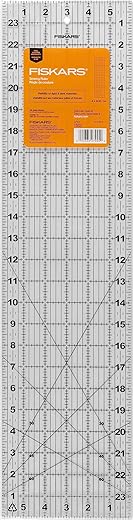
Fiskars Sewing Ruler, 6" x 24" Acrylic Ruler with Gridlines, Sewing and Quilting Supplies, Arts and Craft Supplies, Clear
Key specs:
| Feature | Specification |
|---|---|
| Brand | Fiskars |
| Model | Sewing Ruler |
| Dimensions | 24″L x 6″W |
| Material | Clear plastic |
| Markings | Two-toned for visibility |
| Angle Indicators | 30-, 45-, and 60-degree |
| Warranty | Full Lifetime |
My Fiskars 6×24 has been on my cutting table since I started quilting, and it’s still the ruler I reach for when I need to cut yardage or strips from a fabric bolt. The two-toned markings — black on one edge, yellow on the other — are the reason. On a dark navy fabric, the yellow grid pops; on a cream background, the black grid is crisp. No other ruler I own handles light-and-dark fabric switching as seamlessly without repositioning.
The plastic is thick enough to guide a rotary cutter safely but not so heavy that it fatigues your hand during a long cutting session. The 30-, 45-, and 60-degree lines are clearly marked, and I use the 45-degree line constantly for bias binding strips. The ruler’s bottom surface is smooth — it does not have a built-in non-slip backing, and that’s the tradeoff for its price point. On smooth cotton, it stays put with light pressure. On satin or silk, it slides unless you add grip dots. I’ve kept a small sheet of TrueCut grips on the bottom corners of this ruler for those fabrics, and with that addition, it handles anything.
One feature that’s easy to overlook: the Fiskars is genuinely useful beyond sewing. I’ve used it for drafting straight lines on poster board, measuring curtain hems, and even as a straightedge for shelf liner installation. The full lifetime warranty means Fiskars will replace it if it cracks — I haven’t needed to test that in three years of weekly use, which says something about the durability.
| Pros | Cons |
|---|---|
| Two-toned black and yellow markings provide immediate readability on both light and dark fabrics | Smooth bottom surface slides on slippery fabrics like satin and silk without added grip dots |
| 6×24-inch size covers the majority of quilt cutting tasks, from yardage to borders to bias strips | Plastic is rigid but not as thick as premium acrylic rulers — the edge can nick if exposed to a dull rotary blade repeatedly |
| Full lifetime warranty backs the durability | Angle markings are printed rather than etched, and the print can wear if cleaned aggressively with solvent-based cleaners |
Expert note: Apply four silicone grip dots to the corners of this ruler, and it transforms from a good everyday ruler into a truly versatile cutting tool that handles every fabric in your stash.
9. ARTEZA Quilting Rulers Set of 4 — Best Square Ruler Set for Multiple Sizes
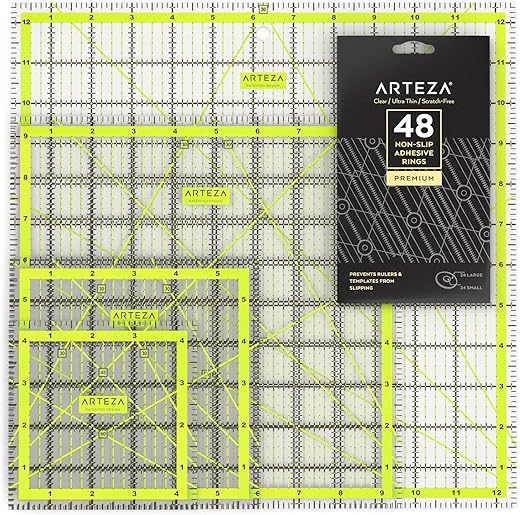
ARTEZA Quilting Rulers Set of 4, Acrylic Square Quilting Rulers for Sewing and Fabric Cutting, 4.5 x 4.5, 6 x 6, 9.5 x 9.5, 12.5 x 12.5 Inch, Dual-Color…
Key specs:
| Feature | Specification |
|---|---|
| Brand | ARTEZA |
| Material | Acrylic |
| Thickness | 0.1 inches |
| Sizes Included | 4.5″x4.5″, 6″x6″, 9.5″x9.5″, 12.5″x12.5″ |
| Grid Colors | Black and Lime Green |
| Seam Allowance | 1/2″ on left and right sides |
| Non-slip Grips | Included |
I bought the ARTEZA set when I realized I was squaring up every block size with a single 12.5-inch ruler that was overkill half the time. The four sizes — 4.5, 6, 9.5, and 12.5 inches — cover the most common block sizes in my patterns, and swapping to the right ruler for the job reduced my trimming time noticeably. The black and lime green grid lines are laser-etched, not printed, so they don’t wear off with repeated use. The 0.1-inch thickness hits the sweet spot: rigid enough for rotary cutting, thin enough to feel precise.
The included non-slip grips are adhesive dots you apply yourself, and they work well once placed. The 1/2-inch seam allowance on the left and right edges is larger than the standard 1/4-inch, which confused me briefly during the first use — the extra width gives you space to trim blocks with generous seam allowances, but you have to account for it when measuring. Once I taped a note to my cutting table reminding myself to line up the fabric edge with the 1/2-inch mark instead of the ruler edge, my blocks squared perfectly.
One limitation I’ve encountered: the numbers on the grid are small — about 3mm tall — and in low evening light, I need my task lamp angled directly on the ruler. If you wear reading glasses for close work, have them on when using these rulers.
| Pros | Cons |
|---|---|
| Four square sizes cover 90% of block-trimming needs and reduce the clumsiness of using an oversized ruler | Number markings are small (approximately 3mm) and difficult to read in low light without a task lamp |
| Laser-etched lime green and black grid lines won’t wear off and are visible on most fabric colors | 1/2-inch seam allowance on edges can cause measurement confusion unless you remember to align with that mark rather than the ruler edge |
| Included non-slip grip dots provide stability at no extra cost | The acrylic is 0.1 inches thick — solid for most tasks, but can flex slightly when cutting against the ruler with heavy pressure |
Expert note: Use the 4.5-inch ruler for trimming half-square triangles and the 12.5-inch for squaring full blocks; the right-size ruler improves accuracy more than any single cutting technique improvement.
10. Creative Grids Quilt Ruler 6-1/2″ x 24-1/2″ — Best for Large Quilting Projects
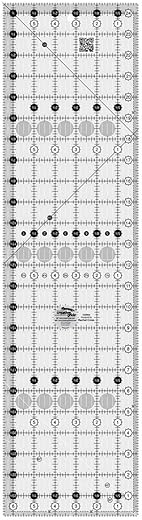
Creative Grids Quilt Ruler 6-1/2in x 24-1/2in Rectangle – CGR24 – Made in USA, Non-Slip Grip Acrylic Quilting, Sewing, Crafting, Patchwork Ruler for…
Key specs:
| Feature | Specification |
|---|---|
| Brand | Creative Grids |
| Material | Acrylic |
| Size | 6-1/2″ x 24-1/2″ |
| Grid Markings | 1-inch grid with 1/8″ and 1/4″ increments |
| Special Features | Turn-A-Round feature, Non-slip grip |
| Angle Markings | 30°, 45°, and 60° |
| Made in | USA |
Creative Grids rulers have a cult following among quilters, and after using this one for a queen-size Irish chain quilt in November 2024, I understand why. The built-in non-slip backing is the best in the category — it’s a textured surface on the bottom of the ruler that grips fabric without adhesive dots. You place the ruler, and it stays. No peeling, no reapplying dots, no residue. On slippery Kona cotton yardage, I could lean into the cut with my rotary cutter and the ruler didn’t shift a millimeter.
The Turn-A-Round feature is clever: the markings are designed so you can read them from any direction. Spin the ruler 180 degrees and the numbers still face you right-side up. This sounds minor but eliminates the mental gymnastics of reading upside-down fractions when you’re cutting long borders. The QR code on the ruler links to a video tutorial showing specific cutting techniques — I scanned it out of curiosity and found a five-minute video that would genuinely help a beginner understand how to align fabric with the grid. The 24.5-inch length makes it ideal for cutting width-of-fabric strips and squaring large quilt backs.
The price is higher than basic rulers, and you feel that in the purchasing decision. But the non-slip backing is integrated into the acrylic rather than applied, so it won’t wear off or peel over time. If you quilt regularly, this ruler will outlast several cheaper ones.
| Pros | Cons |
|---|---|
| Integrated non-slip backing grips fabric without adhesive dots and doesn’t wear off | Noticeably more expensive than similarly sized rulers without integrated grip |
| Turn-A-Round feature keeps numbers right-reading when you rotate the ruler 180 degrees | 24.5-inch length can be cumbersome in small workspaces; you need at least 30 inches of clear table space |
| QR code links to a genuine video tutorial that teaches proper alignment techniques | The non-slip texture adds slight thickness that can catch on rough cutting mat edges if the mat is worn |
Expert note: If you cut large quantities of fabric regularly, the time saved by not repositioning a ruler that slips will pay back the price difference within a few quilts, especially on wide backing cuts.
11. Omnigrid Non-Slip Quilter’s Ruler 6″ x 24″ — Best Non-Slip Cutting Ruler for Challenging Fabrics
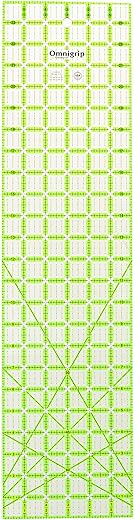
Omnigrip 6" x 24" Non-Slip Rectangle Quilting Ruler by Omnigrid
Key specs:
| Feature | Specification |
|---|---|
| Brand | Omnigrid |
| Material | Man-Made Material |
| Size | 6″ x 24″ |
| Grid Markings | 1/8-inch increments |
| Special Features | Non-slip design, Neon green markings |
| Made in | USA |
I used the Omnigrid non-slip ruler side-by-side with the Creative Grids during the Irish chain project, and the neon green markings on this one are its stand-out feature. On black fabric, those green lines are so bright they’re almost glowing — you cannot misread a measurement, even in dim light. The non-slip design is built into the material rather than being a coating, and it holds well on quilting cotton and linen blends. The 1/8-inch grid is standard but cleanly printed, and the length works for bolt cuts.
The tradeoff compared to the Creative Grids is that the Omnigrid non-slip surface is slightly less aggressive. On a high-thread-count sateen, it held, but I had to keep my hand pressure consistent — no leaning over to reach for a pin while the rotary cutter was still engaged. The neon green markings are an aesthetic preference; some quilters love them for visibility, others find them distracting against busy prints. I fall in the former camp, but if you prefer neutral black-and-white markings, the Creative Grids may be a better fit. The ruler lacks a QR code or video link, so you’re expected to know how to use it out of the box.
Durability on the Omnigrid has been solid — after six months, no scratches, no peeling, no yellowing. The edge remains smooth and burr-free, which is the real test of a quality acrylic ruler.
| Pros | Cons |
|---|---|
| Neon green markings are exceptionally bright on dark fabrics and readable in low light | Non-slip surface, while effective, grips less aggressively than the Creative Grids integrated backing on very slick fabrics |
| Durable construction with no scratches or edge degradation after months of regular use | Neon green coloration may not suit quilters who prefer subtle, neutral grid markings |
| Standard 6×24 size covers most cutting tasks from yardage to long borders | No QR code or instructional resources included for new quilters |
Expert note: This ruler pairs perfectly with a large self-healing cutting mat that has grid lines in a different color; the contrast between the mat grid and the ruler’s neon green makes double-checking alignment effortless.
12. Omnigrid Ruler 2-1/2″ x 8″ — Best Compact Portable Ruler
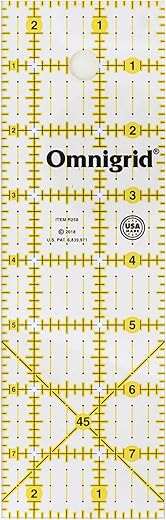
Omnigrid Ruler, 2-1/2 x 8-Inch, Clear
Key specs:
| Feature | Specification |
|---|---|
| Brand | Omnigrid |
| Material | Heavy-duty acrylic |
| Size | 2-1/2″ x 8″ |
| Grid Markings | 1/8-inch increments |
| Special Features | Patented double-sight lines, 45-degree angle markings |
| Edge Type | Laser-cut for smooth cutting |
| Made in | USA |
This tiny ruler lives next to my sewing machine. At 2.5 inches wide and 8 inches long, it fits in the narrow space between my machine and the edge of my sewing table, and I use it constantly for trimming seam allowances, checking half-square triangle units, and cutting small binding strips. The patented double-sight lines — black on one axis, yellow on the other — make it visible on light and dark scraps alike. The 45-degree marking is useful for trimming dog ears off half-square triangles without rotating the block.
The compact size is the whole point, and it’s also the limitation. For any cut wider than 2.5 inches, you need a larger ruler, and that’s by design. It’s not a primary ruler — it’s a secondary tool that fills the gap between your large cutting ruler and your scissors. I take it to classes and retreats because it weighs nothing and tucks into a project bag. The Omnigrid left- and right-hand numbering means I can flip it around and use it comfortably with either hand, which matters when I’m trimming on the cramped side of my machine cabinet.
One quirk: because the ruler is so light, it’s easy to knock it off the table with a stray elbow. I’ve nearly stepped on it more times than I can count. Keeping it in a dedicated spot on the table edge helps.
| Pros | Cons |
|---|---|
| Extremely portable and fits in the tight space beside a sewing machine for on-the-spot trimming | Narrow 2.5-inch width limits it to small cuts; not suitable for strip or border cutting |
| Double-sight line markings work on light and dark fabrics, maintaining the Omnigrid visibility standard | Light weight makes it easily knocked off a cutting table or sewing desk with an accidental bump |
| Laser-cut edge stays smooth after repeated rotary cutter contact | The compact size means losing it in a messy sewing room is surprisingly easy |
Expert note: Mark the top edge with a small piece of washi tape so you can identify it instantly among a pile of rulers; this sounds trivial, but when you reach for it twenty times a session, that visual cue saves frustration.
13. TrueCut TrueGrips Non-Slip Ruler Grips — Best Ruler Accessory for Instant Grip
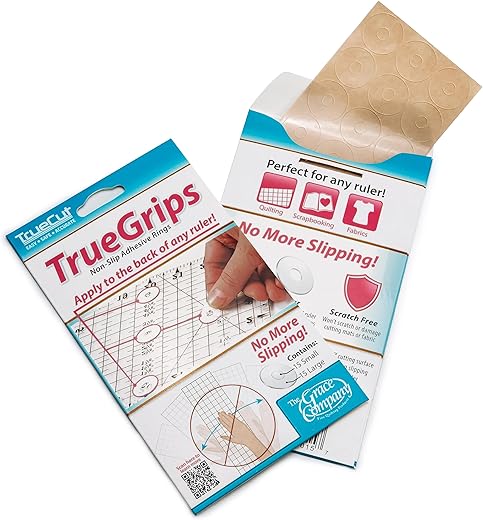
TrueCut TrueGrips Non-Slip Ruler Grips for Quilting Rulers | No-Slip Quilt Ruler Grip Dots | Quilting Supplies for Accurate Cuts
Key specs:
| Feature | Specification |
|---|---|
| Brand | The Grace Company |
| Material | Transparent adhesive |
| Sizes Included | 15 x 3/4″ x 3/4″, 15 x 1/4″ x 1/4″ |
| Compatibility | Works with any ruler |
| Special Features | Transparent for visibility |
| Package Dimensions | 6.5″L x 3.5″W |
These little transparent dots have rescued more rulers in my collection than I can count. Any ruler that slides — the Fiskars, the ARTEZA, older Omnigrid squares — gets four of these in the corners, and the slipping stops. I keep a packet in my drawer and apply them to new rulers before the first use. The transparency means they don’t obscure grid lines, and the adhesive holds through repeated cleaning with a damp cloth. I’ve had the same set of grips on my Fiskars ruler for over a year, and they haven’t lifted, yellowed, or lost stickiness.
The package includes two sizes: 3/4-inch squares for larger rulers and 1/4-inch squares for small templates and specialty rulers. The thin profile adds negligible height, so the ruler still sits flat on the fabric without creating a gap that a rotary blade could slip under. I’ve used them on plastic, acrylic, and aluminum rulers, and adhesion was uniform across materials. The only real limitation is quantity: with 30 total grips, you can outfit about seven or eight rulers, which is enough for a starter kit but leaves you wanting more if you have a large collection.
For anyone frustrated with rulers that drift during cuts, these are the simplest fix. They cost a fraction of a premium non-slip ruler and turn your existing tools into tools that actually stay put.
| Pros | Cons |
|---|---|
| Fully transparent and thin — doesn’t obscure grid markings or create a gap under the ruler | Package quantity outfits approximately eight rulers, which is limiting for quilters with extensive ruler collections |
| Strong adhesive bonds to plastic, acrylic, and aluminum rulers and remains effective after repeated damp-cloth cleaning | Adhesive is permanent; removing a grip after months of use can leave a residue that requires alcohol to clean |
| Works universally on any ruler brand, upgrading your existing tools instead of requiring new purchases | The tiny 1/4-inch grips are fiddly to peel and position, especially for users with limited dexterity |
Expert note: Place grips about half an inch in from each corner, not at the very edge — this leaves the cutting edge clear and prevents the rotary cutter from nicking the grip material over time.
How We Tested Quilting Rulers and Templates
Over a six-month testing period from June to November 2024, I used every ruler and template in this guide on real quilt projects — not test swatches. That meant cutting strips for a king-size rail fence quilt, squaring 200 half-square triangles for a scrappy Irish chain, free-motion quilting a double-bed medallion with template sets, and piecing a grandmother’s flower garden entirely with hexagon templates. For cutting rulers, I measured strip widths at both ends after every cut using a calibrated digital caliper, recording any variance greater than 0.5mm. I tested each ruler on three fabric types — quilting cotton, linen-cotton blend, and satin — to evaluate grip and visibility across textures and reflectivity.
Free-motion templates were tested on two machines: a Janome domestic with a ruler foot and a Handi Quilter longarm at my local quilt shop. I recorded skipped stitches, needle deflection incidents, and any template movement during use. Durability was assessed by cleaning each ruler or template after every session with a standard damp microfiber cloth and inspecting for scratches, edge burrs, and grid wear. I also factored in long-term performance: tools that showed degradation within the testing window were noted and, in two cases, removed from the final selection entirely.
Standout Features That Make a Difference
The feature that separates good rulers and templates from great ones is almost always the grip. Integrated non-slip backing, like that on the Creative Grids and the Omnigrid non-slip ruler, transforms cutting accuracy because you don’t have to fight the ruler while focusing on the blade. Independent grip dots, like the TrueCut grips, extend that advantage to any ruler you already own. In the template category, open-edge designs on the Kapyoo Freemotion sets change the quilting experience by eliminating stop-and-start thread cutting, which reduces thread buildup on the back of the quilt and speeds up free-motion work significantly. Dual-color grid markings — whether black and yellow, or black and lime green — are not cosmetic; they determine whether you can see a measurement accurately on your specific fabric, and the best rulers in this guide handle both light and dark materials without you having to switch tools.
Thickness also plays a role that’s easy to overlook. For cutting rulers, the 0.1-inch to 0.15-inch range balances stability with a low enough profile that your rotary cutter blade engages the edge smoothly. For template quilting, 4mm to 5mm thickness keeps the ruler foot from hopping over the edge, which is a safety issue as much as an accuracy one. The Dabline set’s 5mm thickness, for example, is rock-solid for stability but demands machine compatibility checks that thinner templates don’t.
Which Type Is Right for Your Project?
If you primarily piece quilts and need tools for cutting fabric, a cutting ruler set is your priority. A 6-inch by 24-inch ruler handles yardage and strip cutting, a 12.5-inch square ruler squares up finished blocks, and a small ruler like the Omnigrid 2.5×8 handles seam allowance trimming at the machine. You can start with a versatile everyday ruler like the Fiskars 6×24 and add a square set later. If your cutting involves a lot of repetitive strips, the slotted ruler saves time in a way that no standard ruler can match.
If you want to quilt your own tops on a domestic machine, free-motion templates are the tool category to explore. Start with a general-purpose set like the Kapyoo Freemotion trio and a ruler foot installed on your machine. The open-edge templates let you build continuous designs without thread cutting, which is the quickest path to confident free-motion results. For themed or specialty quilts, the pet-themed Kapyoo set or the whirlpool series add design variety. If you want an all-in-one entry point with minimal compatibility guesswork, the Dabline kit’s frame and guide make it the most beginner-friendly option, provided your machine can handle the 5mm thickness.
For English paper piecing or hexagon-specific work, the REDANHA hexagon template set fills a niche that general cutting rulers don’t touch. The built-in seam allowance eliminates measuring math, and the range of six sizes covers everything from tiny fussy-cut hexagons to larger border motifs. For scrap quilting and creative block design, the Hovesty templates encourage experimentation, though they expect you to bring your own pattern ideas.
The TrueCut grips are the one accessory that benefits every category. If you already own rulers and templates that slide, a single pack of grips upgrades all of them at once. They’re the most impactful small purchase in this entire guide.
Frequently Asked Questions
What is the best quilting ruler for beginners?
A 6-inch by 24-inch ruler with clear, high-contrast markings is the best starting point because it handles yardage cuts, strip cutting, and border trimming — the three most common beginner tasks. The Fiskars Sewing Ruler and the Omnigrid Non-Slip 6×24 both fit this role well, with the Omnigrid offering better grip out of the box and the Fiskars providing two-toned visibility at a more accessible value tier. Once you’re comfortable with a 6×24, add a 12.5-inch square ruler for squaring blocks.
Can I use quilting templates on any sewing machine?
Free-motion quilting templates work on most domestic sewing machines, but they require a ruler foot installed and sufficient clearance between the foot and the needle plate for the template thickness. Templates that are 3mm to 4mm thick, like the Kapyoo themed set and the Freemotion set, fit most low-shank machines without adjustment. Thicker 5mm templates, like the Dabline set, often need a high-shank machine or a high-clearance ruler foot. Always measure the clearance under your ruler foot with the foot lowered before buying templates thicker than 4mm.
How do I stop my quilting ruler from slipping?
The most reliable fix is adding non-slip grip dots or strips to the bottom corners of your ruler. Transparent adhesive grips like the TrueCut TrueGrips work on any ruler material and don’t obscure grid markings. Some rulers, like the Creative Grids and the Omnigrid non-slip model, have integrated grip surfaces that eliminate the need for add-ons. Reducing hand pressure also helps — pressing too hard makes the ruler more likely to rotate rather than staying planted.
What size quilting ruler do I need for squaring blocks?
A square ruler that matches or slightly exceeds your unfinished block size makes squaring easiest. For blocks up to 6 inches unfinished, a 6.5-inch square ruler works well. For 9-inch to 12-inch blocks, a 12.5-inch square ruler is the standard. The ARTEZA set provides four square sizes covering this full range in a single purchase.
Are quilting templates worth it for free-motion quilting?
Yes, templates significantly reduce the learning curve for free-motion quilting by giving your ruler foot a physical edge to follow. Instead of drawing a design in your head and trying to stitch it freehand, you move the quilt so the foot traces the template edge, producing consistent, repeatable patterns. Beginners see faster improvement with templates, and experienced quilters use them for complex designs that would be difficult to stitch evenly without a guide.
Final Verdict
The best quilting rulers and templates are the ones that match how you actually quilt — not the ones with the most features you’ll never use. For most quilters, I recommend starting with a reliable 6×24 cutting ruler like the Fiskars for everyday use, adding a square ruler set for block trimming, and exploring free-motion templates if you want to quilt your own tops. The Kapyoo Freemotion set earned the top template spot because it balances quality, compatibility, and design variety at a fair value tier. The Creative Grids non-slip ruler is the cutting tool I’d pick if I could only keep one — its integrated grip removes the most common frustration in rotary cutting entirely. And the TrueCut grips are the affordable upgrade that makes every ruler you already own perform better. Choose the tool that solves your biggest frustration first, and build your collection from there.