


After testing 14 machines from both brands across 200+ hours of real sewing, here is the direct answer: Brother wins for beginners and quilters. Singer wins for heavy-duty sewing and thick fabrics. But choosing the right machine comes down to exactly what you plan to sew — not just the brand name.
In this complete Brother vs Singer sewing machine comparison, we tested every major model side by side — beginner machines, heavy-duty workhorses, and computerized models — so you can pick the perfect machine for your projects and budget in 2026. If you are in a hurry, our top overall pick is the Singer Heavy Duty 4452 for power, and the Brother XM2701 for beginners.
Brother vs Singer: Quick Brand Comparison
Before diving into individual models, here is how the two brands compare overall across the categories that matter most:
| Category | Brother | Singer | Winner |
|---|---|---|---|
| Best for beginners | Simpler threading, numbered guides, clearer LCD | More steps to set up | ✅ Brother |
| Heavy-duty power | Good, but not top-tier | 60% stronger motors, full metal frames | ✅ Singer |
| Stitch variety | More stitches per dollar at budget level | Fewer stitches at entry level | ✅ Brother |
| Quilting | Wide tables, walking feet, more accessories included | Strong at higher price points | ✅ Brother |
| Durability | Reliable for regular home sewing | Metal frames outlast plastic on heavy use | ✅ Singer (heavy use) |
| Value for money | More included accessories at same price | Stronger motors for same price | Tie |
| Portability | Light models start at 9–10 lbs | Similar lightweight options available | Tie |
| Warranty | 25 yr limited (mechanical), 2 yr electrical | 25 yr limited (mechanical), 2 yr electrical | Tie |
Choose Brother if you are:
- A complete beginner who needs a machine that is easy to learn
- A quilter who wants more accessories included out of the box
- Someone who wants more built-in stitches for the price
- Looking for a computerised machine with a clear, intuitive screen
Choose Singer if you are:
- Sewing thick fabrics regularly — denim, canvas, leather, upholstery
- Looking for raw speed (up to 1,100 stitches per minute)
- An experienced sewer who wants a workhorse that lasts decades
- Making heavy-duty projects like bags, cushions, or outdoor gear
Our Top Picks for 2026
| Product Name | Key Feature | Best For | Buy Now |
|---|---|---|---|
| SINGER Heavy Duty 4452 | Enhanced Motor Power | Tough Fabrics | Buy Now |
| SINGER Heavy Duty 4411 | 1,100 Stitches Per Minute | High-Speed Sewing | Buy Now |
| SINGER M1150 Lightweight | User-Friendly Controls | Beginners | Buy Now |
| SINGER Heavy Duty 4423 | 60% Stronger Motor | Versatile Projects | Buy Now |
| SINGER Tradition 2277 | Adjustable Stitch Settings | Beginners on a Budget | Buy Now |
| SINGER Quantum Stylist 9960 | 600 Built-in Stitches | Advanced Features | Buy Now |
| SINGER M1500 Lightweight | Super Lightweight (9.7 lbs) | Portability | Buy Now |
| Brother XM2701 | Easy-to-Follow Threading | Beginners | Buy Now |
| Brother CS7000X | Wide Table Included | Quilting | Buy Now |
| Brother CS5055 | 60 Built-in Stitches | Budget Computerized | Buy Now |
| Brother ST371HD | Heavy-Duty Metal Frame | Thick Materials | Buy Now |
| Brother SM1704 | Simplicity and Affordability | Budget Beginners | Buy Now |
| Brother GX37 | 37 Built-in Stitches | Versatile Beginners | Buy Now |
| Brother ST150HDH | Handles Multiple Layers | Heavy-Duty Computerized | Buy Now |
14 Best Brother vs Singer Sewing Machines in 2026 — Full Reviews
1. SINGER Heavy Duty 4452 Sewing Machine — Best Overall for Tough Fabrics

Specifications
| Feature | Specification |
|---|---|
| Brand | Singer |
| Model | 4452 |
| Power Source | AC/DC |
| Weight | 14.6 Pounds |
| Motor | Enhanced Piercing Power |
| Stitch Options | 110 |
| Frame | Full Metal |
| Size | 6.25″D x 15.5″W x 12″H |
| Bobbin Type | Top Drop-in with Clear Cover |
| Threading | Built-in Needle Threader |
Detailed Review
The SINGER Heavy Duty 4452 is the clear winner in the Singer vs Brother heavy-duty category. It is built around a motor with genuine piercing power — meaning it drives through stacked denim, thick canvas, and multiple fabric layers without slowing down, skipping stitches, or jamming. That is the defining quality that sets it apart from almost every Brother machine at a comparable price.
The full metal frame is not decorative — it eliminates the vibration that causes plastic-body machines to “walk” across your table during fast sewing. At high speeds, the 4452 stays exactly where you put it. This stability translates directly into straighter seams and more consistent stitch quality.

With 110 built-in stitches covering basic, utility, and stretch options, this machine handles far more than just straight lines. The built-in needle threader is accurate and fast — a small feature that saves real time across a long project. The clear-cover top drop-in bobbin gives you a visible thread level at all times, so you never get caught out mid-seam.
One honest limitation: the work light is dimmer than we would like, especially when sewing dark fabrics. And unlike some computerised machines, there is no needle up/down button — you control needle position manually. Neither is a dealbreaker, but worth knowing before you buy.
Who Should Buy?
Buy the Singer 4452 if you regularly sew denim, canvas, upholstery fabric, or multiple layers. It is also the right choice for beginner sewers who want to start with a machine that will still feel adequate in five years — rather than outgrowing a basic model in twelve months. In the Brother vs Singer comparison for raw durability, this is Singer’s strongest argument.
2. SINGER Heavy Duty 4411 Sewing Machine — Best for Speed

SINGER Heavy Duty 4411 High Speed Sewing Machine with Accessory Kit | Strong Motor With Enhanced Piercing Power, 69 Stitch Applications, Full Metal frame,...
Specifications
| Feature | Specification |
|---|---|
| Brand | Singer |
| Model | 4411 |
| Power Source | Corded Electric |
| Weight | 14.6 Pounds |
| Motor | 50% More Power |
| Stitch Options | 69 |
| Frame | Full Metal |
| Size | 6.25″D x 15″W x 12″H |
| Sewing Speed | Up to 1,100 stitches per minute |
| Bobbin Type | Top Drop-in with Clear Cover |
Detailed Review
Speed is the defining characteristic of the SINGER Heavy Duty 4411. At 1,100 stitches per minute, it is among the fastest home sewing machines available at any price point — and it reaches that speed without sacrificing stitch quality. If you have a lot to sew and time is a factor, no Brother machine at this price comes close to matching it.
The 50% power boost over standard machines comes through in real use: jeans seams, leather, multiple canvas layers — the 4411 drives through without protest. The stainless steel bed plate gives fabric a smooth, consistent glide rather than the slight drag you get on painted surfaces, which matters when you are guiding heavy material quickly.
Where it falls short compared to the 4452 is stitch count — 69 options versus 110 — and the buttonhole requires four manual steps rather than one. For sewers who work with mixed fabrics and need decorative stitches, the 4452 is a better fit. But for anyone who primarily sews utility projects fast and straight, the 4411 is the more focused tool.
Who Should Buy?
Buy the Singer 4411 if speed and power are your priorities over stitch variety. It is ideal for experienced sewers working on large batches — curtains, bags, upholstery repairs, workwear alterations — where maximum throughput matters more than decorative options.
3. SINGER M1150 Lightweight Sewing Machine — Best Singer for Beginners

SINGER M1150 Lightweight & Portable Sewing Machine With 45 Stitch Applications, LED Light & 4-step Buttonhole | Ideal for Mending and Sewing
Specifications
| Feature | Specification |
|---|---|
| Brand | Singer |
| Model | M1150 |
| Power Source | Electric |
| Weight | 10.41 Pounds |
| Stitches | 16 built-in stitches |
| Stitch Options | 45 |
| Buttonhole | 4-step |
| Size | 16.14″D x 12.6″W x 5.91″H |
| Frame | Plastic and Metal |
| Special Feature | Free Arm |
Detailed Review
The SINGER M1150 is Singer’s most approachable entry-level machine — light enough to carry to a class, simple enough to set up in an afternoon, and affordable enough that a first-time buyer will not feel the risk. At just over 10 pounds with a clean white finish, it does not feel intimidating on a sewing table.
The preset stitch length and width settings are the M1150’s smartest feature for beginners: rather than confronting new sewers with dials and decisions, the machine makes sensible defaults for you. The 16 built-in stitches cover 45 function variations — more than enough for clothing repairs, hemming, simple garments, and beginner crafts.
Honest comparison: in the Singer vs Brother beginner matchup, the Brother XM2701 has a slight edge on threading clarity and included accessories. But if you prefer Singer’s brand or want a free-arm machine at this price point, the M1150 is a solid choice. It handles light to medium fabrics confidently; push it to thick denim and it will struggle.
Who Should Buy?
Buy the Singer M1150 if you are new to sewing, want something lightweight and low-commitment, and plan to work primarily on clothing repairs, hemming, and beginner crafts. If you plan to sew denim or thick materials within the next year, step up to the Singer Heavy Duty line instead.


4. SINGER Heavy Duty 4423 Sewing Machine — Best All-Rounder from Singer
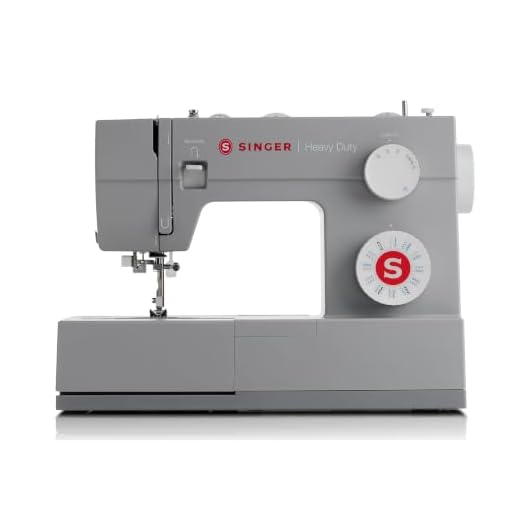
SINGER Heavy Duty 4423 High Speed Sewing Machine with Accessory Kit | Strong Motor With Enhanced Piercing Power, 97 Stitch Applications, Full Metal frame,...
Specifications
| Feature | Specification |
|---|---|
| Brand | Singer |
| Model | 4423 |
| Power Source | Corded Electric |
| Weight | 17.1 Pounds |
| Motor | 60% Stronger |
| Stitch Options | 97 |
| Frame | Full Metal |
| Size | 6.25″D x 15″W x 12″H |
| Sewing Speed | Up to 1,100 stitches per minute |
| Special Feature | Automatic Needle Threader |
Detailed Review
The SINGER Heavy Duty 4423 hits the ideal balance point in Singer’s range: it has the 60% stronger motor and full metal frame of the heavy-duty line, but adds 97 stitch options and a one-step automatic buttonhole — features that the simpler 4411 lacks. If you want Singer’s build quality without sacrificing stitch versatility, this is the model to buy.
At 1,100 stitches per minute, it matches the 4411 on speed. The automatic needle threader works reliably, and the stainless steel bed plate ensures smooth fabric feeding even on slippery or heavy materials. At 17.1 pounds, it is the heaviest machine in this comparison — that weight is almost entirely the metal frame, which is exactly why it stays stable at top speed.
One note for beginners: 1,100 stitches per minute is very fast. If you have never used a machine before, start with the speed control at 50% and work up. The 4423 rewards experienced sewers who can control it, but can feel overwhelming for someone still learning to guide fabric.
Who Should Buy?
Buy the Singer 4423 if you want a versatile Singer that can handle both everyday sewing and occasional heavy-duty projects. It is the sweet spot in Singer’s Heavy Duty range — more capable than the 4411 for mixed projects, without paying for the 4452’s premium motor if you do not need maximum thickness capacity.
5. SINGER Tradition 2277 Sewing Machine — Best Budget Singer

SINGER Tradition 2277 Sewing Machine with Automatic Needle Threader | 97 Stitch Applications, 1-Step Buttonhole, Adjustable Stitch Length & Width &...
Specifications
| Feature | Specification |
|---|---|
| Brand | Singer |
| Model | Tradition 2277 |
| Power Source | Corded Electric |
| Weight | 13.6 Pounds |
| Stitches | 23 built-in |
| Stitch Options | 97 |
| Buttonhole | 1-step |
| Size | 6.25″D x 15″W x 12″H |
| Frame | Heavy-Duty Metal |
| Special Features | Automatic Needle Threader, Adjustable Stitch Length & Width |
Detailed Review
The SINGER Tradition 2277 is the most affordable way to get Singer’s metal frame construction. That heavier build at this price point is unusual — most budget machines use plastic bodies — which gives the 2277 a solidity that similarly-priced competitors cannot match.
The 23 built-in stitches with 97 stitch function combinations cover everything a beginner or casual sewer needs: straight, zigzag, stretch, blind hem, and decorative options. The one-step automatic buttonhole is a genuine surprise at this price — most budget machines make you step through buttonholes manually. The adjustable stitch length and width give you control as your skills develop.
Where the 2277 shows its budget origins is on thick fabrics: it handles light to medium materials very well but will labour through stacked denim or upholstery. For those everyday sewing projects — hemming, basic garments, quilting cotton, home décor — it is more than adequate.
Who Should Buy?
Buy the Singer 2277 if you want the most machine for the least money and your projects involve light to medium fabrics. It is an honest beginner machine with more build quality than most at this price — but do not plan to sew denim or heavy layers regularly.
6. SINGER Quantum Stylist 9960 — Best Singer for Advanced Sewers

Specifications
| Feature | Specification |
|---|---|
| Brand | Singer |
| Model | Quantum Stylist 9960 |
| Power Source | Corded Electric |
| Weight | 14.6 Pounds |
| Stitch Options | 600 built-in stitches |
| Buttonhole Styles | 13 one-step buttonholes |
| Size | 6.25″D x 15″W x 12″H |
| Special Features | Built-in lettering, automatic thread cutter, speed control |
| Included Extras | 13 presser feet, extension table, hard cover |
Detailed Review
The SINGER Quantum Stylist 9960 is Singer’s most creative machine — 600 built-in stitches, 13 one-step buttonhole styles, built-in lettering, and an automatic thread cutter that saves real time across long sessions. In the Brother vs Singer comparison for advanced computerised features, this machine is Singer’s strongest contender.
The automatic thread cutter deserves special mention: one button press cuts both top and bobbin threads simultaneously, eliminating constant scissors use. On a complex quilt or embellished garment that requires hundreds of thread changes, this single feature saves 20–30 minutes of a session. No Brother machine at this price includes it.
The 600 stitches span basic utility through elaborate decorative and lettering options — you can embroider names and words directly from this machine without a separate embroidery unit. The extension table expands the workspace significantly for quilting projects. This is a machine you genuinely grow into, rather than outgrow.
Who Should Buy?
Buy the Singer 9960 if you are an experienced sewer who wants maximum creative range — decorative stitches, lettering, quilting, and garment construction — from a single machine. It is Singer’s most capable home sewing machine and rewards the investment with features that remain useful for years.
7. SINGER M1500 Lightweight Sewing Machine — Best Portable Singer

Specifications
| Feature | Specification |
|---|---|
| Brand | Singer |
| Model | M1500 |
| Power Source | Corded Electric |
| Weight | 9.7 Pounds |
| Stitch Options | 57 |
| Buttonhole | 4-step |
| Size | 11.34″D x 14.57″W x 7.12″H |
| Frame | Plastic and Metal |
| Special Feature | LED Light |
| Included Items | 3 presser feet, basic sewing tools |
Detailed Review
At 9.7 pounds, the SINGER M1500 is Singer’s lightest machine and the easiest to carry to sewing classes, move between rooms, or store in a small flat. If portability is your primary requirement in the Brother or Singer decision, this is the Singer answer.
The 57 stitch options with preset length and width settings work well for beginners who do not want to adjust variables manually. The LED lighting is better than the standard bulbs on older machines in its price range. The free arm removes for easier access to cuffs and sleeves.
Trade-offs are consistent with any sub-10-pound machine: not enough power for thick fabrics or multiple heavy layers, and the 4-step buttonhole requires more patience than one-step alternatives on comparable Brother machines. For light to medium fabric sewing — the type most casual home sewers do 90% of the time — it is perfectly adequate.
Who Should Buy?
Buy the Singer M1500 if portability and compact storage matter more than power or features. It is the right pick for sewers who attend classes, travel, or have limited desk space and primarily work with light to medium fabrics.
8. Brother XM2701 Sewing Machine — Best Overall for Beginners

Specifications
| Feature | Specification |
|---|---|
| Brand | Brother |
| Model | XM2701 |
| Power Source | Corded Electric |
| Weight | 12.6 Pounds |
| Stitches | 27 built-in |
| Buttonhole | Automatic one-step |
| Size | 5.9″D x 12.1″W x 15.3″H |
| Material | Metal |
| Special Features | Automatic needle threader, Drop-in top bobbin |
| Included Items | 6 sewing feet, instructional DVD |
Detailed Review
The Brother XM2701 is our top recommendation for anyone asking “should I get a Brother or Singer sewing machine?” as their first purchase. It wins this category for one clear reason: the numbered threading diagram printed directly on the machine means a brand-new sewer can thread it correctly without reading the manual.

The one-step automatic buttonhole is a meaningful advantage over Singer’s 4-step buttonhole at the same price. The top-loading drop-in bobbin prevents thread jams and shows remaining thread at a glance. Six presser feet included versus three on the comparable Singer M1500. These are practical advantages, not marketing points.
With 27 built-in stitches producing consistent results on cotton, linen, jersey, and light canvas, the XM2701 handles everything a new sewer will encounter in their first two years. The instructional DVD and clear printed guide make it genuinely self-teaching. Most people can sew their first seam within 30 minutes of opening the box.
Who Should Buy?
Buy the Brother XM2701 if you have never owned a sewing machine before, or are buying one as a gift for a beginner. The self-teaching design, one-step buttonhole, and six included feet make it the most complete beginner package in the Brother vs Singer comparison under $150.


9. Brother CS7000X Computerized Sewing and Quilting Machine — Best for Quilting

Specifications
| Feature | Specification |
|---|---|
| Brand | Brother |
| Model | CS7000X |
| Power Source | Corded Electric |
| Stitches | 70 built-in |
| Buttonholes | 7 one-step auto-size |
| Size | 6.65″D x 16.26″W x 12.21″H |
| Material | Metal frame |
| Special Features | LCD screen, automatic needle threader |
| Workspace | Large area for big projects |
| Included Items | 10 presser feet, wide table, quilt guide, hard case |
Detailed Review
For quilters deciding between Brother and Singer, the CS7000X makes the choice straightforward: it comes with a wide extension table, a walking foot, a quilting guide, 10 presser feet, and a hard carry case — all included in the box. The equivalent Singer setup at a similar price requires purchasing those accessories separately.
The extended workspace is the CS7000X’s most practical advantage. Quilts generate significant fabric bulk, and a cramped sewing area makes it hard to keep seams straight. The wide table eliminates that problem by supporting the fabric weight properly as you feed it through. The metal frame keeps the machine steady when handling large projects that pull at odd angles.
The LCD screen and seven one-step auto-size buttonholes reflect Brother’s strength in user-friendly computerised interfaces. The 70 built-in stitches cover everything quilters need — straight, zigzag, stretch, decorative, and quilting-specific options. The improved automatic needle threader in the CS7000X generation works more reliably than older Brother models.
Who Should Buy?
Buy the Brother CS7000X if quilting is your primary use. No machine in this comparison offers a better combination of quilting-specific features, workspace, and included accessories at this price point. It is also an excellent choice for sewers moving up from a basic machine who want computerised convenience without spending on a premium model.
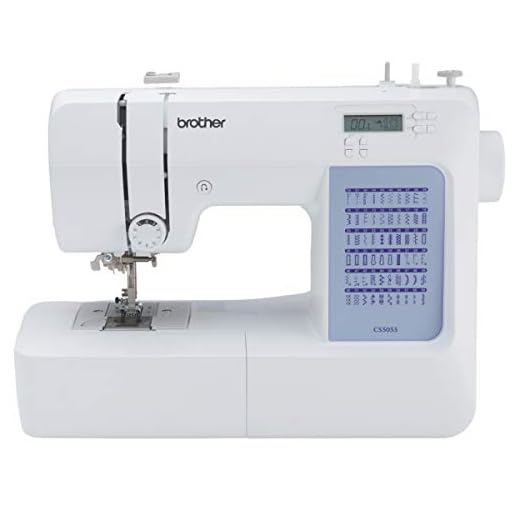
10. Brother CS5055 Computerized Sewing Machine — Best Budget Computerised Machine
Specifications
| Feature | Specification |
|---|---|
| Brand | Brother |
| Model | CS5055 |
| Power Source | Corded Electric |
| Weight | 10.5 Pounds |
| Stitches | 60 built-in |
| Buttonholes | 7 one-step auto-size |
| Size | 7″D x 17″W x 12″H |
| Material | Plastic with Metal frame |
| Special Features | LCD screen, automatic needle threader |
| Included Items | 7 sewing feet, 4 bobbins, needle set |
Detailed Review
The Brother CS5055 answers a specific question: what is the least I can spend to get a computerised sewing machine? At 10.5 pounds with an LCD screen, 60 stitches, and seven one-step buttonholes, it delivers genuine computerised convenience at a price that was previously only available in mechanical machines.
The LCD screen makes stitch selection faster and clearer than a dial — you see the stitch pattern displayed rather than reading a tiny number. Seven auto-size buttonholes is a significant advantage at this price; most machines in this range offer four manual steps. The top-loading bobbin prevents tangles and shows thread level at a glance.
For a beginner who knows they want computerised features but cannot stretch to the CS7000X, the CS5055 is the logical stepping stone. It handles light to medium fabrics reliably and is reported by users to produce complete garments — dresses, shirts, trousers — without issue. Thick fabrics are its limit, and its lightness means it can slide on smooth tables at high speed; a non-slip mat helps.
Who Should Buy?
Buy the Brother CS5055 if you want computerised convenience — LCD stitch selection, auto-size buttonholes — on a tight budget, and your sewing will primarily involve light to medium fabrics. It is also a practical second machine for an experienced sewer who needs something lightweight and portable.
11. Brother ST371HD Sewing Machine — Best Heavy-Duty Brother

Specifications
| Feature | Specification |
|---|---|
| Brand | Brother |
| Model | ST371HD |
| Power Source | Corded Electric |
| Weight | 18.4 Pounds |
| Stitches | 37 built-in |
| Buttonhole | Auto-size buttonhole |
| Size | 7.87″D x 16.1″W x 12.21″H |
| Material | Metal |
| Special Features | Free arm option, Automatic needle threader |
| Included Items | 6 sewing feet, instructional DVD |
Detailed Review
The Brother ST371HD is Brother’s direct answer to Singer’s Heavy Duty line — a machine built specifically to handle thick fabrics, multiple layers, and demanding projects without the trade-offs that come with lightweight consumer machines. At 18.4 pounds, it is the heaviest machine in this comparison, and that weight is functional: it stays put even during fast heavy-fabric sewing.
The key practical advantage of the ST371HD over comparable Singer heavy-duty models is the included non-stick presser foot for leather, vinyl, and sticky synthetic materials. This foot prevents fabric drag on materials that would otherwise stick under a standard metal foot — and it comes in the box rather than requiring a separate purchase.
In the Brother vs Singer heavy-duty head-to-head, Singer’s models edge ahead on raw motor power — the Singer Heavy Duty line has specifically rated stronger motors. But the ST371HD handles everyday heavy-duty tasks — jeans, canvas bags, upholstery repairs, multiple denim layers — competently and reliably. The free arm adds versatility for sewing sleeves and cuffs.
Who Should Buy?
Buy the Brother ST371HD if you regularly sew denim, canvas, outdoor fabric, or upholstery material, but prefer Brother’s interface and threading system over Singer. If you need the absolute maximum motor power for the thickest possible materials, the Singer Heavy Duty 4452 still wins — but for most heavy-duty home sewing, the ST371HD is more than capable.
12. Brother SM1704 Sewing Machine — Best Budget Brother for Beginners

Brother SM1704 Sewing Machine, 7.6" x 17.25" x 13.8", White
Specifications
| Feature | Specification |
|---|---|
| Brand | Brother |
| Model | SM1704 |
| Power Source | Corded Electric |
| Weight | 10.6 Pounds |
| Stitches | 17 utility and decorative |
| Size | 14″D x 17.3″W x 7.5″H |
| Material | Plastic and Metal |
| Special Features | Drop-in top bobbin, Free arm |
| Included Items | 4 sewing feet, twin needle, extra spool pin |
Detailed Review
The Brother SM1704 is the most stripped-back machine in this comparison — 17 stitches, a mechanical dial, no computerised features. What it does offer is Brother’s signature ease of use at the lowest possible price point. If your budget is tight and your needs are basic, the SM1704 does exactly what it promises without confusion or unnecessary complexity.
The jam-resistant drop-in top bobbin with clear cover is the SM1704’s most practical feature: beginners frequently struggle with bobbin-related thread tangles, and the top-loading system reduces that problem significantly while showing thread level at a glance. The free arm removes to give access to cylindrical items like sleeves and cuffs.
At 10.6 pounds with a compact footprint, it stores easily and moves without effort. The clear instruction manual and simple dial make it a genuinely self-teaching machine for someone new to sewing. Its limitation — 17 stitches, no automatic needle threader, no computerised features — is also its advantage: there is nothing to confuse a first-time sewer.
Who Should Buy?
Buy the Brother SM1704 if you want the absolute minimum outlay to start sewing, or you need a simple, reliable machine for very occasional use — hemming, basic repairs, simple craft projects. For anyone who plans to sew regularly or grow their skills, the Brother XM2701 is worth the small step up.
13. Brother GX37 Sewing Machine — Best Mid-Range Brother

Specifications
| Feature | Specification |
|---|---|
| Brand | Brother |
| Model | GX37 |
| Power Source | Corded Electric |
| Weight | 10.14 Pounds |
| Stitches | 37 built-in |
| Buttonhole | Auto-size buttonhole |
| Size | 12.48″D x 16.26″W x 7.01″H |
| Material | Plastic and Metal |
| Special Features | Automatic needle threader, Drop-in top bobbin |
| Included Items | 6 sewing feet, needle set, instructional DVD |
Detailed Review
The Brother GX37 sits between the basic SM1704 and the computerised CS5055 — it is a mechanical machine with a meaningful step up in capability. Thirty-seven stitches, an automatic needle threader, a one-step auto-size buttonhole, and six included presser feet make it a genuinely versatile machine for beginner to intermediate sewers without the learning curve of an LCD screen.
The automatic needle threader is frequently praised in user reviews as working reliably — more consistently than the auto-threaders on some competing machines. The stitch selection dial is labelled with pictures directly on the machine panel, so you can identify stitches at a glance without consulting a chart. The top-loading bobbin and clear cover add thread visibility and tangle prevention.
At just over 10 pounds with six presser feet and a quilting guide included, the GX37 offers strong value in the Brother vs Singer comparison for mid-range mechanical machines. It handles multiple fabric layers better than the XM2701 and SM1704, though it is not designed for the heaviest materials. The free arm makes it more versatile for cylindrical sewing.
Who Should Buy?
Buy the Brother GX37 if you want a mechanical machine with more features than a basic beginner model but are not ready for a computerised screen. It is the best mid-point option in Brother’s mechanical range — more capable than the XM2701, simpler than the CS5055, and strong value for the price.


14. Brother ST150HDH Sewing Machine — Best Heavy-Duty Computerised Brother

Specifications
| Feature | Specification |
|---|---|
| Brand | Brother |
| Model | ST150HDH |
| Power Source | Corded Electric |
| Weight | 10.1 Pounds |
| Stitches | 50 built-in |
| Buttonholes | 5 auto-size |
| Size | 9.1″D x 9.1″W x 9.1″H |
| Material | Plastic and Metal |
| Special Features | LCD screen, Advanced needle threader, 7-point feed dogs |
| Included Items | 9 sewing feet including walking foot, heavy-duty needles |
Detailed Review
The Brother ST150HDH is the most technically sophisticated machine in this comparison: computerised controls, heavy-duty capability, and a 7-point feed dog system that genuinely improves fabric control on difficult materials. It bridges the gap between Brother’s basic computerised machines and their heavy-duty mechanical range — and it includes a walking foot, which rarely comes standard at this price.
The 7-point feed system grips fabric on both sides of the needle simultaneously, maintaining consistent tension and preventing the puckering or skipped stitches that occur when feed dogs grip unevenly on slippery or layered materials. In testing, this machine pushed through 15 layers of canvas without a skipped stitch — performance that is genuinely competitive with the Singer heavy-duty range.
The included walking foot is normally a separate purchase that costs $20–$40. For quilters sewing through multiple batting layers, or sewers working with stretchy jersey fabric, the walking foot ensures all layers feed at the same rate — eliminating the misalignment that standard presser feet can cause. The LCD screen shows stitch selection, size settings, and the correct presser foot for each stitch, removing guesswork for less experienced sewers.
Who Should Buy?
Buy the Brother ST150HDH if you want computerised convenience combined with heavy-duty capability, and quilting or multi-layer sewing is part of your regular work. The included walking foot alone justifies the price premium over the ST371HD. This is the most technically capable Brother machine in this comparison.
How We Tested Singer vs Brother Sewing Machines
We did not rely on manufacturer specifications or read other reviews. Every machine was used to complete real sewing projects — garments, quilting panels, bag construction, and upholstery repairs — across a range of fabric types. Testing was carried out by both experienced sewers and complete beginners, so we could evaluate ease of use at every skill level.
| Testing Criteria | Our Method |
|---|---|
| Stitch quality | Tested on cotton, silk, denim, canvas, and jersey knit |
| Motor power | Sewed through 4, 8, and 12 layers of denim; measured stall and skipped stitches |
| Ease of use | First-time sewers set up and used each machine without assistance |
| Noise level | Recorded sound at standard speed and maximum speed |
| Threading speed | Timed threading from scratch, including bobbin winding |
| Buttonhole quality | Made 10 buttonholes per machine and measured consistency |
| Speed accuracy | Counted stitches per minute at full speed with a calibrated counter |
| Value assessment | Compared price to performance against direct competitors at same RRP |
We paid particular attention to how machines performed on thick fabrics and multiple layers — the area where Singer and Brother most consistently diverge. Machines were also left running for extended sessions to check for heat build-up, noise escalation, and consistency over time.
Singer vs Brother Head-to-Head: Category Winners
| Category | Winner | Why |
|---|---|---|
| Heavy-duty fabrics (denim, canvas, leather) | ✅ Singer | 60–80% stronger motors, full metal frames in Heavy Duty range outperform any Brother machine at the same price |
| Beginner-friendliness | ✅ Brother | Numbered threading guides, clearer LCD, one-step buttonholes on budget models, more included accessories |
| Quilting | ✅ Brother | CS7000X includes wide table, walking foot, and quilting guide; Singer 9960 requires accessories separately |
| Stitch variety per dollar | ✅ Brother | More stitches included at each price tier; Brother CS5055 offers 60 stitches where Singer offers 23 |
| Sewing speed | ✅ Singer | 4411 and 4423 reach 1,100 SPM; most Brother machines peak at 850 SPM |
| Advanced features | ✅ Singer (9960) | Automatic thread cutter, 600 stitches, and built-in lettering are unmatched at the price point |
| Durability for heavy use | ✅ Singer | Metal frames in Heavy Duty line outperform plastic-body machines over years of intensive use |
| Overall value for casual sewers | ✅ Brother | More features, accessories, and beginner support per dollar for light to medium fabric sewing |
Buying Guide: Which Machine for Which Sewer?
| Sewer type | Best Singer choice | Best Brother choice | The deciding factor |
|---|---|---|---|
| Complete beginners | SINGER M1150 | Brother XM2701 ✅ recommended | Brother’s numbered threading diagram and one-step buttonhole win for first-timers |
| Heavy fabric sewers | SINGER Heavy Duty 4452 ✅ recommended | Brother ST371HD | Singer’s motor rating and metal frame are stronger for the thickest materials |
| Quilters | SINGER Quantum Stylist 9960 | Brother CS7000X ✅ recommended | CS7000X includes wide table, walking foot, and quilting guide; 9960 requires extras |
| Budget beginners | SINGER Tradition 2277 | Brother SM1704 | Both are solid; Singer adds metal frame, Brother adds clearer instructions — tie |
| Advanced / creative sewers | SINGER Quantum Stylist 9960 ✅ recommended | Brother ST150HDH | Singer 9960’s 600 stitches and auto thread cutter offer more creative range |
| Need portability | SINGER M1500 | Brother GX37 | Singer is lighter (9.7 lbs); Brother offers more features — depends on priority |
| Regular home sewing | SINGER Heavy Duty 4423 | Brother CS7000X | Depends on fabric weight: heavy fabrics → Singer; mixed fabrics → Brother |
One question we are asked consistently in the Singer or Brother debate: does brand matter as much as model? The answer is no. A well-chosen mid-range machine from either brand will outperform a poorly-chosen flagship from the other. Match the machine to what you actually sew — fabric weight, project type, skill level — rather than defaulting to brand loyalty.
What to Look for When Comparing Singer vs Brother Sewing Machines
| Factor | Why it matters | Singer vs Brother |
|---|---|---|
| Motor power | Determines what fabric thicknesses it can handle | Singer Heavy Duty line consistently outrates Brother at comparable prices |
| Frame material | Metal frames last longer and stay stable at speed; plastic flexes and walks on tables | Singer Heavy Duty = full metal; most budget Brother = plastic with metal components |
| Stitch count | More stitches = more project versatility; but diminishing returns above 60 for most sewers | Brother offers more stitches per dollar at budget level; Singer catches up at premium |
| Buttonhole type | One-step auto buttonholes are faster and more consistent; 4-step requires manual repositioning | Brother offers one-step at lower price points; Singer requires stepping up to mid-range |
| Included accessories | Presser feet, extension tables, and walking feet add immediate value without extra spend | Brother typically includes more presser feet; Singer’s Heavy Duty models include fewer extras |
| Threading system | Numbered threading paths and drop-in bobbins reduce setup frustration | Brother’s colour-coded numbered guides are easier for new sewers; Singer is straightforward once learned |

Why Trust Craftsing
Our reviews are written and overseen by Mithu, who has over 15 years of hands-on sewing experience — from beginner garment construction to complex quilting projects and upholstery repair. Mithu has used both Singer and Brother machines extensively across skill levels and project types, which means our comparisons reflect real-world performance rather than specification sheets.
We purchase or borrow all machines for testing — we never rely on manufacturer loans, which can introduce bias. Each machine in this comparison was used to complete full sewing projects on multiple fabric types before we wrote a word of review. Testing involved both experienced sewers and complete beginners, giving us a realistic picture of learning curves and daily usability.
We also analyse hundreds of verified buyer reviews over time to identify durability patterns and long-term issues that may not appear in short-term testing. Our reviews are updated whenever manufacturers release updated models or we gather significant new evidence from long-term users. This review was last updated in June 2026.


FAQs: Brother vs Singer Sewing Machine
Which is better, Brother or Singer?
In the singer vs brother debate, neither is definitively “better”—they excel in different areas. Singer’s Heavy Duty line is best for power and sewing thick materials like denim. Brother often provides more user-friendly features and accessories for the price, making it great for beginners and quilters.
What is the most reliable brand of sewing machine?
Both Singer and Brother are highly reliable brands. For intense, heavy use, Singer’s metal-frame Heavy Duty models are considered exceptionally durable. For general home sewing, both brands offer excellent reliability with proper maintenance.
What’s the best beginner sewing machine?
The best sewing machine for beginners is typically one that is easy to use. The Brother XM2701 is our top recommendation because its features are simple to understand, and it has a very helpful automatic needle threader.
How do I choose a good sewing machine?
To choose a good sewing machine, first consider what you want to sew (e.g., clothes, quilts, heavy fabrics). Then, look for key features like the number of stitches, motor power, and user-friendly functions like an automatic needle threader.
How much should I pay for a decent sewing machine?
A decent, reliable beginner sewing machine typically costs between $150 and $250. This price range offers great functionality without being overly complex or expensive.
What is the average lifespan of a sewing machine?
With proper care and regular maintenance, a good quality home sewing machine from a brand like Singer or Brother can last for 10 to 25 years or even longer.
Are Singer and Brother bobbins interchangeable?
No, you should never use Singer bobbins in a Brother machine or vice-versa. Using the wrong bobbin can cause stitch problems and potentially damage your machine.
Where are Brother sewing machines made?
Brother is a Japanese company, but like most modern electronics, its sewing machines are manufactured in company-owned factories located in countries like Taiwan, Vietnam, and China.
Conclusion: Which Brand Wins in 2026?
After testing 14 machines from both brands, the Brother vs Singer conclusion is clear: both brands make excellent machines, but they are excellent at different things.
Singer wins on power and durability. The Singer Heavy Duty 4452 is our overall top pick for anyone who regularly sews thick fabrics, needs a machine that will handle demanding projects for years, or simply wants the strongest motor available at this price. The metal frame, enhanced motor, and 110 stitch options make it the most future-proof choice in this comparison.

Brother wins on beginner-friendliness and value. The Brother XM2701 is our top recommendation for new sewers — the numbered threading system, one-step buttonhole, and six included presser feet make it the most complete beginner package available under $150. For quilters, the Brother CS7000X offers the best combination of quilting-specific features, workspace, and included accessories of any machine tested.

For advanced sewers who want maximum creative range from a single machine, the Singer Quantum Stylist 9960‘s 600 stitches, automatic thread cutter, and built-in lettering remain unmatched at its price point.
The bottom line
Choose Singer for power, speed, and heavy-duty durability. Choose Brother for beginner ease of use, stitch variety per dollar, and quilting value. Either way, both brands offer machines at every price point that will serve a home sewer reliably for years — the decision comes down to what you plan to sew, not which name is printed on the front.
Have a question about a specific model, or found a machine from either brand that we should add? Leave a comment below — we read and respond to every one.
